
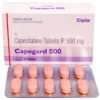
Capegard (Capecitabine) – 500 Mg

Price range: $285.00 through $930.00
| Active Ingredient | Capecitabine |
|---|---|
| Manufacturer | Cipla Limited |
| Packaging | 10 tablets in 1 strip |
| Delivery Time | 6 To 15 days |
| SKU: | Capegard (Capecitabine) – 500 Mg |
Capegard (Capecitabine): Uses, Dosage, Side Effects, and Everything You Need to Know
If you or someone you love has just been prescribed Capegard (Capecitabine), you probably have a dozen questions running through your mind. What is this medicine actually doing inside the body? How should it be taken? What side effects should you watch for? And is it safe alongside other medications?
This guide walks through all of that in plain language. Capegard is a well-established oral chemotherapy drug, and while it’s powerful, understanding how it works can make the treatment journey feel a lot less overwhelming.
Note: This article is for general information only. Capegard is a prescription chemotherapy medicine that must be used strictly under the supervision of an oncologist. Nothing here should be taken as medical advice or as a substitute for guidance from your treating doctor.
What Is Capegard (Capecitabine)?
Capegard is a branded formulation of Capecitabine, manufactured by Cipla Ltd. It belongs to a class of anticancer drugs known as antimetabolites, specifically a fluoropyrimidine carbamate. In simple terms, Capegard is a “prodrug” — meaning it doesn’t work directly in its original form. Once swallowed, it travels through the liver and tumor tissue, where a series of enzymes gradually convert it into 5-fluorouracil (5-FU), the active compound that actually fights cancer cells.
This design is intentional. Instead of infusing 5-FU directly into the bloodstream (which is how it was traditionally given), Capegard allows the drug to be converted preferentially inside tumor cells, because cancerous tissue tends to have higher levels of the enzyme (thymidine phosphorylase) that triggers this final conversion. The result is a treatment that can be taken as a tablet at home, rather than requiring frequent IV chemotherapy sessions.
Capegard 500 Tablet is an anticancer medicine primarily used in the treatment of colorectal cancer and breast cancer, and it interferes with the synthesis of RNA and DNA in cancer cells, which slows their growth and eventually leads to their destruction.
Capegard tablets are typically available in two strengths — 150 mg and 500 mg — allowing oncologists to fine-tune the dose based on body surface area, cancer type, and treatment stage.
How Does Capecitabine Work?
To understand why Capegard is effective, it helps to know the three-step journey the drug takes inside the body:
- Absorption: After you swallow the tablet, it’s absorbed through the intestinal wall and enters the bloodstream in its inactive form.
- Liver conversion: The liver converts capecitabine into two intermediate compounds.
- Tumor-targeted activation: These intermediates are then converted into active 5-fluorouracil, largely at the tumor site itself, where enzyme activity is highest.
Once activated, 5-FU disrupts the ability of cancer cells to build new DNA and RNA — essentially cutting off their ability to divide and multiply. Because rapidly dividing cells (which describes most cancer cells) are more vulnerable to this disruption, the drug can selectively damage tumors while causing comparatively less harm to normal, slow-dividing cells. That said, some healthy fast-turnover tissues — like the lining of the gut, hair follicles, and skin — are still affected, which explains many of the common side effects discussed later.
What Is Capegard Used For?
Capegard (Capecitabine) is approved and widely prescribed for several types of cancer, including:
- Colorectal cancer — as a standalone treatment or combined with other chemotherapy drugs, both after surgery (adjuvant therapy) and for advanced or metastatic disease.
- Breast cancer — often used when the cancer has spread (metastatic) or hasn’t responded adequately to other chemotherapy regimens like taxanes or anthracyclines.
- Gastric (stomach) cancer — frequently combined with platinum-based drugs such as oxaliplatin or cisplatin.
- Off-label uses — oncologists sometimes prescribe capecitabine for other cancers, including certain esophageal and pancreatic cancers, based on clinical judgment and individual patient factors.
The exact indication, dose, and treatment duration always depend on the cancer’s type, stage, genetic markers, and how the patient’s body responds and tolerates treatment.
How Is Capegard Taken?
Capegard is an oral chemotherapy tablet, which is part of why many patients find it more convenient than IV-based regimens — it doesn’t require hospital visits for infusions.
A few general points about administration:
- Take it with food. Capegard tablets should generally be swallowed whole with a glass of water, within 30 minutes after a meal. This helps improve tolerance and supports more consistent absorption.
- Don’t crush or split tablets unless specifically instructed by your doctor or pharmacist.
- Follow the exact schedule. Capecitabine is usually given in cycles — commonly a pattern of taking the medicine for a set number of days (such as 14 days), followed by a rest period (such as 7 days) before the next cycle begins. This on-off rhythm gives the body time to recover between doses.
- Twice-daily dosing is typical, roughly 12 hours apart — for example, once in the morning and once in the evening.
The dose and the number of treatment cycles depend on the type and stage of the cancer being treated, and your oncologist will calculate the precise dose based on your body surface area (calculated from height and weight), kidney function, and overall health.
Important: Never adjust your dose, skip doses, or stop the medication on your own — even if you’re feeling fine or experiencing side effects. Chemotherapy dosing is carefully calibrated, and unsupervised changes can either reduce effectiveness or increase toxicity. Always call your treatment team if you’re struggling to take a dose as prescribed.
Common Side Effects of Capegard
Like all chemotherapy agents, Capegard comes with a real side effect profile, and being prepared for it can make the experience far less frightening. Here are the ones patients report most often:
Digestive System
- Diarrhea (which can occasionally become severe and needs prompt reporting to your doctor)
- Nausea and vomiting
- Loss of appetite
- Abdominal pain or cramping
- Mouth sores (stomatitis) that can make eating and swallowing uncomfortable
- Constipation
Skin and Hands/Feet
One of the most distinctive side effects of capecitabine is hand-foot syndrome, medically known as palmar-plantar erythrodysesthesia (PPE). It’s reported to affect roughly 50% or more of patients on capecitabine therapy, making it the most frequently reported adverse effect of the drug. Early signs include tingling, numbness, redness, or swelling on the palms and soles; in more advanced cases, this can progress to painful cracking, blistering, or peeling of the skin.
Because hand-foot syndrome tends to build gradually, catching it early is key. Simple habits — keeping hands and feet moisturized, avoiding excessive heat or friction (hot showers, tight shoes, vigorous scrubbing), and reporting the first signs of tingling or redness — can help your doctor adjust the dose before it worsens. Treatment interruption or dose reduction, guided by your oncologist, remains the most reliable way to manage it.
General/Systemic
- Fatigue and general weakness
- Fever
- Mild hair thinning (less pronounced than with many IV chemotherapy drugs)
- Watery or irritated eyes
Less Common but Important to Report Immediately
- Signs of infection (fever, chills, sore throat)
- Unusual bleeding or bruising
- Severe or persistent diarrhea (more than 4 bowel movements a day above your normal pattern)
- Chest pain, irregular heartbeat, or shortness of breath
- Yellowing of the skin or eyes (signs of liver trouble)
- Signs of a severe allergic reaction (swelling of the face/throat, difficulty breathing, widespread rash)
Not everyone experiences every side effect, and severity varies widely between individuals. Your oncology team will typically run regular blood tests during treatment to monitor blood counts, liver function, and kidney function, catching any issues early.
Who Should Avoid Capegard?
Capegard isn’t suitable for everyone. Your doctor will likely avoid or adjust this medicine if you:
- Are allergic to capecitabine or any other ingredient in the tablet
- Have previously had a severe reaction to other fluoropyrimidine drugs (such as 5-fluorouracil)
- Are pregnant or breastfeeding — capecitabine can harm a developing baby and is not considered safe during breastfeeding
- Have significantly low white blood cell or platelet counts (neutropenia, leucopenia, or thrombocytopenia)
- Have a known deficiency of the enzyme dihydropyrimidine dehydrogenase (DPD) — this enzyme breaks down fluoropyrimidines, and its absence can cause severe, sometimes life-threatening toxicity
- Have severe kidney impairment
- Have significant, uncontrolled heart disease, since fluoropyrimidines can occasionally trigger cardiac side effects
Before starting treatment, be transparent with your oncologist about your complete medical history — including any prior chemotherapy, existing organ conditions, and family history of severe reactions to similar drugs.
Drug Interactions to Be Aware Of
Certain medicines and supplements can interact with Capegard, either increasing toxicity or reducing effectiveness. Some notable ones include:
- Warfarin and other blood thinners — capecitabine can significantly increase the anticoagulant effect, raising bleeding risk. Close monitoring of clotting parameters (INR) is essential if you’re on both.
- Phenytoin (an anti-seizure medication) — capecitabine may raise phenytoin levels in the blood.
- Folic acid/leucovorin — sometimes intentionally combined with capecitabine in treatment regimens, but can also increase toxicity if not properly managed.
- Antacids containing aluminum or magnesium — may slightly affect absorption.
- Other chemotherapy drugs — capecitabine is frequently combined deliberately with agents like oxaliplatin, docetaxel, or lapatinib as part of a treatment protocol, but this must always be physician-directed.
Always give your full medication list — including over-the-counter drugs, herbal supplements, and vitamins — to your oncology team before starting Capegard.
Diet and Lifestyle Tips During Capegard Treatment
While chemotherapy affects everyone differently, a few general lifestyle habits tend to make the treatment journey smoother:
- Stay well hydrated, especially if you’re experiencing diarrhea or vomiting, to prevent dehydration.
- Eat small, frequent meals rather than large ones if nausea or appetite loss is an issue.
- Avoid alcohol and smoking, as both can interfere with treatment effectiveness and slow recovery.
- Protect your hands and feet from excessive heat, friction, or pressure to help minimize hand-foot syndrome.
- Practice good oral hygiene with a soft toothbrush to reduce the risk and severity of mouth sores.
- Get adequate rest, since fatigue is one of the most common and persistent effects of ongoing chemotherapy.
- Attend every scheduled follow-up and blood test, even if you’re feeling well — these checks are how your care team catches problems early and adjusts your dose safely.
Storage Instructions
- Store Capegard tablets at room temperature, generally between 15°C and 30°C, away from direct sunlight and moisture.
- Keep the medicine in its original packaging until it’s time to take a dose.
- Keep it out of reach of children and pets.
- Chemotherapy tablets should be handled with care — wash your hands after handling, and if a caregiver needs to help administer the medicine, they should ideally wear gloves, since capecitabine can be absorbed through the skin.
- Do not flush unused tablets down the toilet or throw them in household trash; ask your pharmacist about proper disposal of unused chemotherapy medication.
Capegard vs. Other Brands of Capecitabine
Capecitabine is manufactured under several brand names globally, including Xeloda (the original branded version) and various generics like Capegard. Generic versions such as Capegard, produced by established pharmaceutical companies like Cipla, contain the same active ingredient at equivalent strength and are required to meet regulatory bioequivalence standards. In many cases, generics offer a more affordable option for long-term cancer treatment without a difference in clinical outcomes — but always take the specific brand and dose your oncologist has prescribed, and don’t switch brands without checking with your treatment team first, since tablet appearance, packaging, and even minor formulation differences can matter for consistent tracking of your regimen.
How Is the Right Dose Decided?
One of the more technical but important aspects of Capegard therapy is that the dose isn’t a fixed number for everyone — it’s individualized. Oncologists typically calculate the starting dose based on body surface area (BSA), a value derived from your height and weight, since this correlates more closely with how the body processes and clears the drug than weight alone.
From there, the calculated dose is usually rounded to the nearest combination of 150 mg and 500 mg tablets, so the regimen is practical to follow at home. Beyond BSA, your doctor will also factor in:
- Kidney function — since capecitabine and its metabolites are cleared through the kidneys, reduced kidney function often calls for a lower starting dose.
- Liver function — because the conversion of capecitabine into its active form happens in the liver, significant liver impairment can affect how the drug behaves in the body.
- Prior chemotherapy history — patients who’ve had significant toxicity with fluoropyrimidines in the past may start at a reduced dose.
- Overall performance status — general strength, nutritional status, and ability to tolerate treatment side effects.
It’s common for oncologists to adjust the dose downward during treatment if side effects like hand-foot syndrome, diarrhea, or low blood counts become significant, rather than stopping treatment altogether. This kind of fine-tuning is a normal part of chemotherapy management, not a sign that anything has gone wrong.
What Makes Capegard Different From IV Chemotherapy?
Many patients weighing treatment options wonder how an oral tablet like Capegard compares to traditional intravenous (IV) chemotherapy. A few practical differences stand out:
- Convenience: Capegard can be taken at home, which means fewer hospital visits purely for drug administration, though regular check-ups and blood tests are still necessary.
- Steadier drug exposure: Because it’s taken as tablets over multiple days rather than delivered in a single infusion, capecitabine can produce a more gradual, sustained exposure to the active drug.
- Comparable effectiveness: In several cancers, particularly colorectal and breast cancer, oral capecitabine has demonstrated efficacy that is broadly comparable to IV 5-fluorouracil regimens in appropriately selected patients, which is part of why it has become a standard option in modern oncology protocols.
- Different side effect emphasis: While both forms of fluoropyrimidine therapy share overlapping side effects, hand-foot syndrome tends to be reported more frequently with oral capecitabine, while some IV regimens carry a relatively higher risk of certain infusion-related or mouth-related toxicities.
None of this makes one form of treatment inherently “better” than the other — the right choice always depends on the specific cancer, treatment goals, and the patient’s individual health profile, which is why this decision is made by an oncologist rather than a general guideline.
Emotional and Practical Support During Treatment
Starting chemotherapy — even an oral one like Capegard — can bring up a lot of anxiety, and that’s completely normal. A few things that tend to help patients and families cope:
- Keep a symptom diary. Jotting down what side effects show up, when, and how severe they feel can help your oncologist fine-tune your dose more precisely at follow-up visits.
- Set medication reminders. Because Capegard follows a strict twice-daily schedule with specific meal timing, phone alarms or pill organizers can help maintain consistency.
- Loop in a caregiver. Having someone else aware of your schedule and watching for warning signs (like worsening diarrhea or skin changes) adds an extra layer of safety.
- Connect with a support network. Many cancer centers offer counseling, support groups, or patient navigators who specialize in helping people manage the practical and emotional side of oral chemotherapy.
- Don’t minimize side effects. It’s common for patients to want to “push through” symptoms rather than “bother” their doctor. But early reporting of issues like hand-foot syndrome or diarrhea genuinely leads to better long-term outcomes and more comfortable treatment.
Frequently Asked Questions About Capegard (Capecitabine)
1. How long does a typical Capegard treatment cycle last?
Most regimens follow a cycle of about 14 days of medication followed by a 7-day rest period, though this varies based on the specific cancer type and protocol your oncologist has designed for you.
2. Can Capegard be taken on an empty stomach?
It’s generally recommended to take Capegard within 30 minutes after eating, since food can affect how consistently the drug is absorbed. Always follow your doctor’s specific instructions.
3. Is hair loss common with Capegard?
Hair thinning can occur, but it’s typically much milder than with many IV chemotherapy drugs. Significant hair loss is less commonly reported with capecitabine alone.
4. What should I do if I miss a dose?
Don’t double up on your next dose. Contact your oncology team for guidance on how to proceed, since the right course of action depends on how much time has passed and where you are in your treatment cycle.
5. Can Capegard be combined with radiation therapy?
Yes, capecitabine is sometimes used as a “radiosensitizer” alongside radiation therapy for certain cancers, since it can make tumor cells more responsive to radiation. This is always a deliberate part of a combined treatment plan designed by your oncology team.
6. Will I need regular blood tests during treatment?
Yes. Regular monitoring of blood counts, liver enzymes, and kidney function is a standard part of capecitabine therapy to catch and manage side effects early.
7. Is it safe to get vaccinated while on Capegard?
Certain vaccines, especially live vaccines, may need to be avoided during chemotherapy because your immune system is weakened. Always check with your oncologist before getting any vaccination during treatment.
Disclaimer:-
This information is for educational and informational purposes only and is not intended as medical advice, diagnosis, or treatment. Capegard (Capecitabine) is a prescription chemotherapy drug that must be used strictly under the supervision of a qualified oncologist. Always consult your doctor or healthcare provider for personalized medical advice, dosage, and safety information. Do not start, stop, or change any medication without professional guidance. Individual results and side effects may vary.
Additional information
| unit | 300 Tablet, 90 Tablet, 120 Tablet, 150 Tablet |
|---|


Reviews
There are no reviews yet.