
Imiquimod Cream 5% (Imiquad Cream) 12.5 Mg Sachet
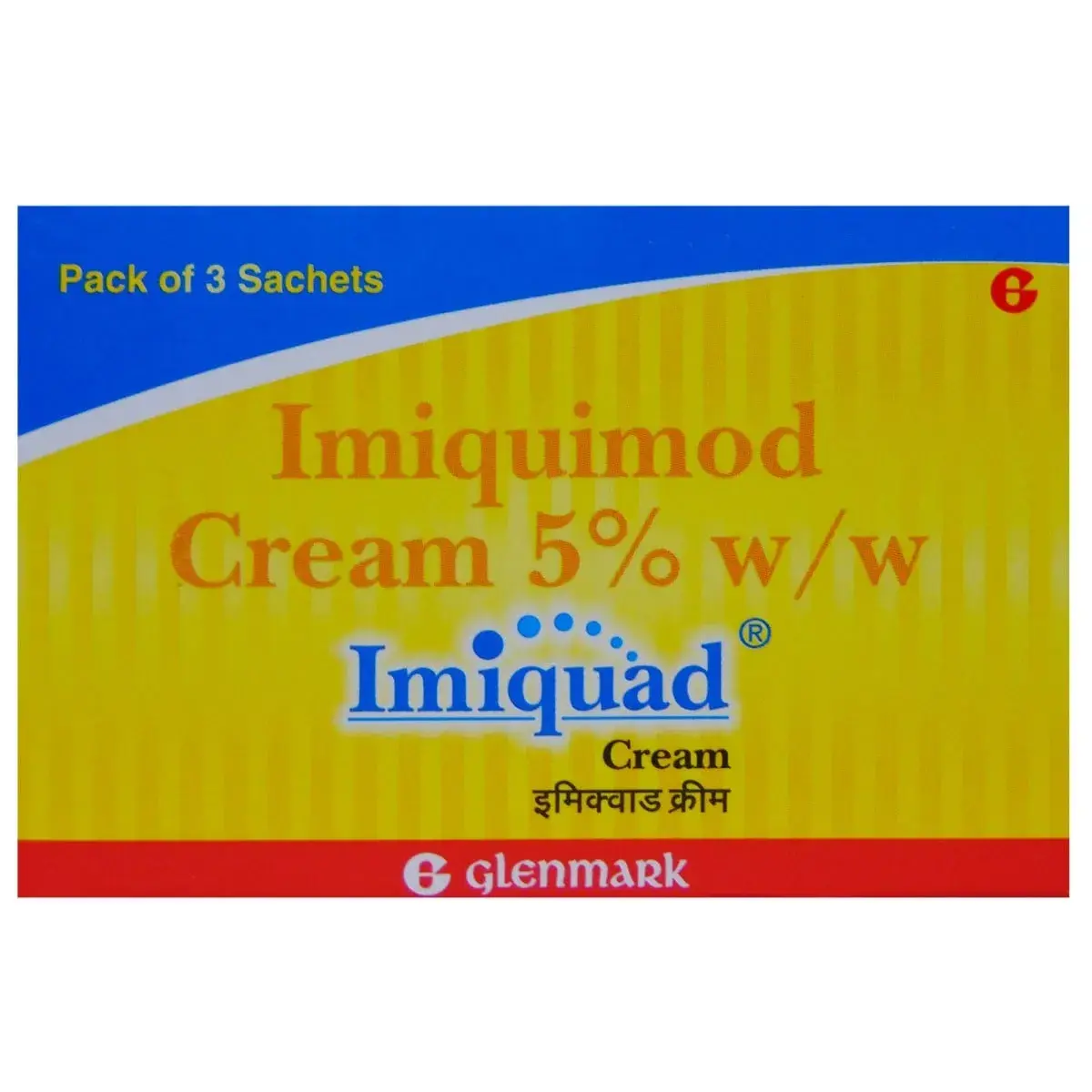
Price range: $75.00 through $216.00
| Active Ingredient | Imiquimod |
|---|---|
| Manufacturer | Glenmark Pharmaceuticals Ltd. |
| Packaging | 0.25 gm in 1 sachet |
| Strength | 12.5mg |
| Delivery Time | 6 To 15 days |
| SKU: | Imiquad Sachet (Imiquimod) – 12.5 Mg |
Imiquimod Cream 5% (Imiquad Cream): Uses, Benefits, Application, and Safety Guide
If you’ve been prescribed Imiquimod Cream 5% (Imiquad Cream), you probably have a dozen questions running through your head. What exactly does it treat? How do you apply it correctly? Is it safe? Will it hurt? This guide answers all of that in plain, everyday language — no confusing medical jargon, just the facts you actually need before (and while) using this cream.
Imiquimod Cream 5%, marketed under the brand name Imiquad Cream, is a topical prescription medication widely used in dermatology to treat certain skin conditions caused by abnormal cell growth or viral infection. It’s not a typical antibiotic or steroid cream — it works in a completely different way, by activating your own immune system to fight the problem from within. That’s what makes it both fascinating and, for many patients, a little intimidating to start using.
Let’s break down everything you need to know.
What Is Imiquimod Cream 5% (Imiquad Cream)?
Imiquimod is classified as an immune response modifier. Instead of directly killing viruses, bacteria, or abnormal cells the way a typical medicine might, it works by stimulating the skin’s local immune response. When applied to the skin, imiquimod prompts immune cells to release cytokines — natural chemical messengers — which then help the body recognize and clear away abnormal or virus-infected cells.
Imiquad Cream contains imiquimod at a 5% strength, meaning every gram of cream delivers a therapeutic dose of the active ingredient in a smooth, easy-to-apply base. It’s typically packaged for external use only and is available strictly on prescription, since correct diagnosis and supervised use are essential for both safety and effectiveness.
In short: Imiquad Cream doesn’t just sit on the surface of the skin — it works with your body to correct the problem at a cellular level.
What Is Imiquad Cream Used For?
Imiquimod Cream 5% is primarily prescribed by dermatologists for three main conditions:
1. External Genital and Perianal Warts (Condyloma Acuminata)
These warts are caused by certain strains of the human papillomavirus (HPV). Imiquad Cream helps the immune system target and clear the wart tissue over a period of weeks, rather than physically removing it through freezing or surgery.
2. Actinic Keratosis (AK)
Actinic keratosis refers to rough, scaly patches on sun-exposed skin — commonly the face, scalp, ears, or forearms — that develop after years of UV exposure. These patches are considered precancerous, and if left untreated, a small percentage can progress to skin cancer. Imiquad Cream is often used on the face or scalp to clear these lesions.
3. Superficial Basal Cell Carcinoma (sBCC)
For certain confirmed cases of superficial basal cell carcinoma — a slow-growing, non-melanoma skin cancer — dermatologists may use Imiquad Cream as a non-surgical treatment option, particularly when surgery isn’t ideal due to the lesion’s location or the patient’s overall health.
It’s worth repeating: this cream is only effective when it’s used for the specific condition it was prescribed for, on the specific area your doctor has identified, and for the exact duration recommended. Using it for anything else — or on the wrong part of the body — isn’t just ineffective, it can be harmful.
How Does Imiquimod Cream Work?
This is where Imiquad Cream really stands apart from ordinary skin creams. Most topical treatments work chemically or mechanically — think exfoliants, antibiotics, or steroids that reduce inflammation. Imiquimod takes a different route entirely.
Once applied, imiquimod binds to a receptor on immune cells called Toll-like receptor 7 (TLR7). This triggers the release of cytokines like interferon-alpha, which essentially “wake up” the local immune response in that area of skin. Your immune system then gets to work identifying and clearing out the abnormal cells — whether that’s HPV-infected wart tissue, sun-damaged precancerous cells, or cancerous basal cells.
Because the medication works by activating your own immune defenses rather than introducing an external chemical agent to directly destroy tissue, it tends to be more targeted, and absorption into the bloodstream is minimal when used as directed.
How to Use Imiquad Cream Correctly
Correct application matters enormously with this medication — more so than with most other topical creams. Here’s a general step-by-step approach, though you should always follow your dermatologist’s specific instructions over any general guide, since dosing frequency and duration vary by condition.
- Wash your hands before and after application.
- Clean and dry the affected area gently before applying the cream.
- Apply a thin layer of Imiquad Cream only to the area your doctor has identified — avoid healthy surrounding skin as much as possible.
- Rub it in gently until it’s absorbed; don’t apply an occlusive (airtight) dressing unless specifically instructed.
- Leave it on for the recommended time — this is usually several hours or overnight, depending on the condition being treated.
- Wash the area with mild soap and water after the recommended contact time has passed.
- Wash your hands thoroughly after application to avoid accidentally transferring the cream to your eyes, mouth, or other sensitive areas.
Application frequency differs significantly by condition — some regimens call for a few applications per week, others for nightly use over a period of weeks. This is precisely why Imiquad Cream should only be used under a doctor’s guidance, and why patients shouldn’t adjust the frequency or duration on their own, even if the skin appears to be healing faster (or slower) than expected.
What to Expect: Skin Reactions During Treatment
Here’s something patients are rarely told clearly enough: it’s normal for the treated skin to look worse before it looks better.
Because Imiquad Cream works by triggering a local immune response, redness, swelling, flaking, scabbing, or mild oozing at the application site are common and often expected signs that the medication is doing its job. Many dermatologists actually look for this reaction as a sign of a good immune response.
That said, there’s a difference between an expected reaction and a reaction that’s too intense. Contact your prescribing doctor if you notice:
- Severe pain, blistering, or ulceration
- Signs of infection such as pus, warmth, or fever
- Reactions spreading well beyond the treated area
- Swelling of the face, lips, or throat, or difficulty breathing (this needs emergency attention)
Your doctor may advise a short treatment break to let the skin recover before resuming, rather than stopping the medication altogether — so don’t discontinue use on your own without checking in first.
Precautions to Keep in Mind
A few important precautions go a long way toward using Imiquad Cream safely and effectively:
- For external use only. Avoid contact with eyes, lips, nostrils, and inside the mouth or vagina.
- Avoid sun exposure on the treated area where possible, and use sun protection, since treated skin can become more sensitive to UV light.
- Don’t use occlusive dressings (bandages that trap moisture and air) unless your doctor specifically tells you to.
- Avoid sexual contact while the cream is on the skin if it’s being used for genital warts, since it can weaken condoms and diaphragms and may irritate a partner’s skin.
- Inform your doctor about other skin conditions, autoimmune disorders, or if you’re pregnant, planning pregnancy, or breastfeeding, since the risks and benefits need to be weighed carefully.
- Don’t use it on broken, sunburned, wounded, or irritated skin unless directed.
- Keep it away from children and pets, and never share your prescription with someone else, even if their symptoms look similar.
Who Should Avoid Imiquad Cream?
While generally well-tolerated when used correctly, Imiquad Cream isn’t right for everyone. Your doctor will likely avoid prescribing it, or use it with extra caution, if you:
- Have a known hypersensitivity to imiquimod or any ingredient in the cream base
- Have a pre-existing autoimmune condition, since immune stimulation could theoretically aggravate certain conditions
- Are pregnant or breastfeeding (unless your doctor determines the benefits outweigh potential risks)
- Have very sensitive, broken, or compromised skin in the treatment area
- Are a child under the age recommended for this treatment, since safety in younger age groups is more limited
Always share your full medical history with your dermatologist before starting treatment — this isn’t a cream to self-diagnose and self-prescribe.
Imiquad Cream vs. Other Treatment Options
Patients often ask how Imiquad Cream compares to alternatives like cryotherapy (freezing), surgical removal, or other topical treatments such as 5-fluorouracil. Here’s a general comparison of how it differs:
- Versus cryotherapy or surgery: Imiquad Cream is non-invasive and doesn’t involve pain from freezing or cutting, but it requires patience — results build up gradually over weeks rather than instantly.
- Versus other topical creams: Its immune-modulating mechanism is distinct from creams that work by chemically exfoliating or directly destroying tissue, which is part of why it’s favored for cosmetically sensitive areas like the face.
- Recurrence rates: Because it engages the immune system rather than just removing visible tissue, some studies suggest it may be associated with lower recurrence for certain conditions like genital warts, though outcomes vary by individual and condition severity.
Your dermatologist is best placed to decide which option suits your specific diagnosis, skin type, and lifestyle — this comparison is meant to inform your conversation with them, not replace it.
Key Benefits of Imiquad Cream
Understanding why dermatologists reach for this particular treatment helps explain why it’s remained a trusted option for years:
- Non-invasive. There’s no cutting, freezing, or scarring risk associated with surgical removal — the treatment happens entirely through a topical application.
- Targets the root cause, not just the symptom. By activating the immune system, it addresses the underlying viral or abnormal cell activity rather than simply removing visible tissue.
- Convenient at-home use. Once prescribed and explained by a doctor, most patients can apply the cream themselves at home rather than needing repeated in-clinic procedures.
- Good cosmetic outcomes. Because it doesn’t rely on physical destruction of tissue, many patients see minimal scarring once the treated area heals, which matters especially for visible areas like the face.
- Established track record. Imiquimod has been studied and used in dermatology for many years, giving both doctors and patients a solid base of clinical experience to draw on.
Condition-Specific Treatment Notes
Because Imiquad Cream is prescribed for three fairly different conditions, it helps to understand how the approach can differ depending on what’s being treated.
For genital and perianal warts: Treatment is usually spread out over multiple weeks, with the cream applied a few times per week rather than daily. Doctors often advise patients to keep track of the treated area’s appearance and to attend follow-up visits to assess how well the warts are responding, since regrowth or incomplete clearance sometimes calls for a modified plan.
For actinic keratosis: Since AK typically develops on sun-exposed areas like the face and scalp, doctors are especially mindful of cosmetic outcomes and skin sensitivity in these regions. Treatment cycles are often structured with defined “on” and “off” periods to let the skin recover between applications, and sun protection during this period is particularly important.
For superficial basal cell carcinoma: This use case demands the closest medical supervision, since it involves a confirmed cancer diagnosis. Doctors will usually schedule more frequent check-ins to monitor how the lesion is responding and may combine imiquimod treatment with other diagnostic follow-ups, such as periodic skin examinations, to confirm the cancer has fully cleared.
In all three cases, consistency and patience are key. Skin conditions treated with an immune-response approach don’t resolve overnight, and stopping treatment early — even if the skin looks better — can lead to incomplete clearance and a higher chance of recurrence.
Possible Side Effects
Like any prescription medication, Imiquad Cream can cause side effects, and being aware of them ahead of time can make the treatment process feel far less alarming.
Common, localized reactions at the application site may include:
- Redness or a burning sensation
- Itching or tenderness
- Flaking, dryness, or scaling
- Mild swelling
Less common systemic effects can occasionally occur, particularly with larger treatment areas or more frequent application, including:
- Headache
- Fatigue
- Flu-like symptoms such as mild fever or muscle aches
- Nausea
These systemic effects tend to be mild and temporary, but they’re worth mentioning to your doctor, especially if they persist or worsen. As noted earlier, more serious reactions — such as intense blistering, signs of infection, or an allergic reaction — require prompt medical attention rather than a wait-and-see approach.
Tips for a Smoother Treatment Experience
A few small habits can make the course of treatment considerably more comfortable:
- Set a reminder for application days if your regimen isn’t a daily one — it’s easy to lose track over a multi-week course.
- Keep the area breathable. Loose, breathable clothing over treated areas (especially genital or perianal regions) can reduce friction and irritation.
- Track your skin’s response with quick notes or photos (with your doctor’s approval) so you and your dermatologist can objectively compare progress at follow-up visits.
- Avoid harsh skincare products — exfoliants, retinoids, or strong actives — on or near the treated area unless your doctor says it’s fine.
- Stay consistent with follow-ups. Skipping check-in appointments makes it harder for your doctor to catch complications early or adjust your plan if needed.
- Be patient with the process. Visible improvement is often gradual, and the “worse before better” phase is a normal part of how this medication works.
Storage Instructions
- Store Imiquad Cream at room temperature, away from direct sunlight and moisture.
- Keep the packet or tube tightly closed when not in use.
- Do not use single-use sachets more than once, and discard any partially used packet after application, if applicable to your packaging.
- Keep out of reach of children.
- Check the expiry date before use and dispose of expired medication safely.
Frequently Asked Questions About Imiquimod Cream 5% (Imiquad Cream)
1. How long does it take for Imiquad Cream to work?
This varies depending on the condition being treated. Genital warts may show visible improvement within a few weeks, while actinic keratosis and basal cell carcinoma treatments often require a longer, structured course over several weeks. Your doctor will set realistic expectations based on your specific case.
2. Is Imiquad Cream painful to use?
The cream itself doesn’t typically cause pain on application, though the treated area may become red, itchy, or tender as the immune response builds — this is a normal part of the healing process for most patients.
3. Can I use makeup or moisturizer over Imiquad Cream?
Generally, you should avoid applying other products over the treated area during the contact period unless your doctor approves it, since this can interfere with absorption or increase irritation.
4. What happens if I miss a dose?
Apply it as soon as you remember, unless it’s almost time for your next scheduled application — in that case, skip the missed one and continue your regular schedule. Never apply a double amount to make up for a missed dose.
5. Can Imiquad Cream be used on any part of the body?
No. It should only be applied to the specific area diagnosed and prescribed by your doctor. Using it elsewhere on the body without medical guidance isn’t safe or effective.
6. Does insurance or a prescription control access to this cream?
Yes, Imiquad Cream is a prescription-only medication in most regions, meaning it should be used strictly under a qualified doctor’s supervision and diagnosis.
7. Will the treated skin look normal again after treatment?
In most cases, yes — as the reaction subsides and the skin heals, the treated area typically returns to a normal appearance, though this can take some additional time after the treatment course ends.
Disclaimer:-
This information about Imiquimod Cream 5% (Imiquad Cream) is for educational purposes only and should not replace professional medical advice, diagnosis, or treatment. Always consult a qualified healthcare professional before using this medicine, and follow the prescribed dosage and application instructions.
Additional information
| unit | 30 Tablets, 60 Tablet, 90 Tablet |
|---|





Reviews
There are no reviews yet.