
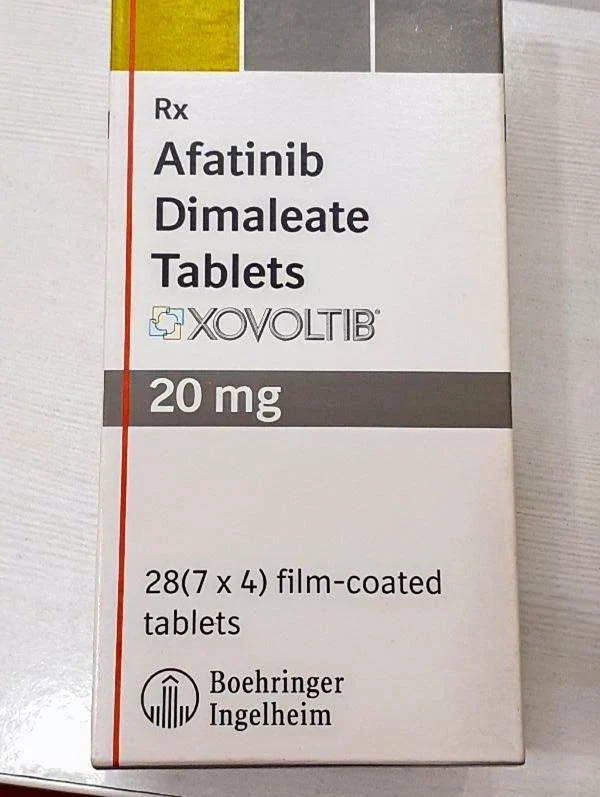
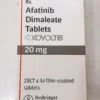
Xovoltib 20 Mg (Afatinib Dimaleate)
Price range: $840.00 through $2,826.00
| Active Ingredient | Afatinib Dimaleate |
|---|---|
| Manufacturer | Boehringer Ingelheim India Pvt.Ltd |
| Packaging | 7 tablets in 1 strip |
| Strength | 20mg, 30mg, 40mg, 50mg |
| Delivery Time | 6 To 15 days |
| SKU: | Xovoltib 20mg (Afatinib Dimaleate) |
Xovoltib 20 Mg (Afatinib Dimaleate): Uses, Dosage, Side Effects & Complete Guide
A lung cancer diagnosis — particularly one tied to a specific genetic mutation — is one of the most challenging things a person can face. But here is something that genuinely matters: if your cancer carries an EGFR (Epidermal Growth Factor Receptor) mutation, you are in an era of precision medicine where targeted therapies can make a profound difference — delivering better outcomes, better tolerability, and better quality of life than traditional chemotherapy alone.
Xovoltib 20 Mg (Afatinib Dimaleate) is one of those targeted therapies — a second-generation EGFR inhibitor specifically designed to take on EGFR-mutant non-small cell lung cancer with a more comprehensive and durable approach than its predecessors.
If your oncologist has prescribed Xovoltib, this guide will give you everything you need to understand your treatment — how it works, what it treats, how to take it correctly, what side effects to anticipate, and how to stay as safe and comfortable as possible throughout your journey. Written clearly, honestly, and in genuinely human language.
What Is Xovoltib 20 Mg (Afatinib Dimaleate)?
Xovoltib 20 Mg is an oral targeted therapy tablet containing Afatinib Dimaleate equivalent to 20 mg of Afatinib as the active ingredient. It is a high-quality generic formulation of the originator brand Giotrif (Gilotrif in the US) — making this clinically proven, life-extending targeted therapy more accessible and affordable for patients who need it.
Afatinib belongs to the class of anticancer drugs called ErbB family blockers — more specifically, a second-generation, irreversible pan-ErbB tyrosine kinase inhibitor (TKI). This classification is critical to understanding what makes Afatinib different from and more comprehensive than first-generation EGFR TKIs like Erlotinib and Gefitinib.
While first-generation EGFR TKIs bind reversibly to EGFR (ErbB1) alone, Afatinib binds irreversibly and simultaneously to all four members of the ErbB family:
- ErbB1 (EGFR / HER1)
- ErbB2 (HER2)
- ErbB3 (HER3)
- ErbB4 (HER4)
This broader, more permanent blockade is the defining characteristic of Xovoltib — and what gives it its clinical advantage in specific EGFR-mutant settings.
Xovoltib is available in multiple strengths — 20 mg, 30 mg, and 40 mg — allowing oncologists to carefully titrate doses based on individual patient tolerance and response. The 20 mg tablet is particularly important as the lowest available dose — critical for dose reductions in patients experiencing significant side effects.
Understanding EGFR-Mutant Non-Small Cell Lung Cancer
To fully appreciate what Xovoltib does, it helps to understand the molecular biology of the cancer it targets.
Non-small cell lung cancer (NSCLC) accounts for approximately 85% of all lung cancers. Within NSCLC, approximately 10–15% of Caucasian patients and 30–50% of Asian patients carry activating mutations in the EGFR gene — making EGFR the most commonly mutated oncogene in NSCLC.
The most common EGFR mutations are:
- Exon 19 deletions (Del19) — approximately 45% of EGFR mutations
- Exon 21 L858R substitution — approximately 40% of EGFR mutations
- Uncommon EGFR mutations — including G719X, S768I, L861Q — which are particularly important for Afatinib
These mutations cause the EGFR protein to be constitutively active — permanently switched on, continuously sending signals that drive cancer cell proliferation, survival, and spread — regardless of normal cellular controls.
Key characteristics of EGFR-mutant NSCLC:
- More common in non-smokers or light smokers
- More common in women
- More common in patients of Asian ethnicity
- Predominantly adenocarcinoma histology
- Highly responsive to EGFR-targeted therapy
- Molecular testing (EGFR mutation analysis) before treatment is mandatory — Xovoltib works only in EGFR-positive tumors
How Does Xovoltib 20 Mg (Afatinib Dimaleate) Work?
Here is the science explained in plain, understandable terms:
Step 1 — The Problem
Activating EGFR mutations create a permanently “on” molecular switch in cancer cells. EGFR — a receptor tyrosine kinase on the cell surface — normally activates only when its growth factor ligands bind to it. In mutant-EGFR cancer cells, this activation is constant, continuously firing downstream signaling pathways:
- PI3K/AKT/mTOR — promotes cell survival and resistance to death
- RAS/RAF/MEK/ERK — drives cell proliferation
- JAK/STAT — promotes immune evasion and survival
Step 2 — Afatinib’s Irreversible Action
Afatinib enters the cell and forms a covalent (irreversible) bond with the cysteine residue (Cys797) in the ATP-binding pocket of the EGFR kinase domain — and equivalently with the corresponding sites on ErbB2, ErbB3, and ErbB4.
This irreversible bond is fundamentally different from the reversible binding of first-generation TKIs:
- Reversible binding (Erlotinib/Gefitinib) — the drug binds and then unbinds; the kinase can reactivate when drug levels fall
- Irreversible binding (Afatinib) — the drug permanently disables the kinase; the cancer cell must synthesize entirely new EGFR protein to restore signaling — a process that takes significant time
Step 3 — Pan-ErbB Blockade
By simultaneously and irreversibly blocking all four ErbB family members, Afatinib:
- Blocks homo- and heterodimerization of ErbB receptors — the pairing between receptors that amplifies signaling
- Disrupts the entire ErbB signaling network rather than just one node
- Overcomes some resistance mechanisms that involve ErbB2 or ErbB3 upregulation — common ways cancer cells escape single-target EGFR blockade
Step 4 — The Result
Cancer cells dependent on ErbB signaling for survival lose their growth signals — they stop proliferating and undergo apoptosis (programmed cell death). Tumors shrink or stop growing. The immune system and normal tissue function are preserved because normal cells have multiple redundant growth pathways and do not depend solely on ErbB signaling for survival.
What Is Xovoltib 20 Mg (Afatinib Dimaleate) Used For?
1. First-Line Treatment of EGFR Mutation-Positive Metastatic NSCLC
Xovoltib (Afatinib) is approved and widely used as first-line therapy for patients with metastatic NSCLC whose tumors harbor activating EGFR mutations — specifically exon 19 deletions or exon 21 L858R substitution.
The pivotal LUX-Lung 3 and LUX-Lung 6 clinical trials established Afatinib as a superior first-line option compared to platinum-based chemotherapy:
LUX-Lung 3 (Afatinib vs. Cisplatin/Pemetrexed):
- Median PFS: 11.1 months (Afatinib) vs. 6.9 months (chemotherapy)
- In Del19 patients: 13.6 months vs. 6.9 months
LUX-Lung 6 (Afatinib vs. Cisplatin/Gemcitabine — Asian population):
- Median PFS: 11.0 months (Afatinib) vs. 5.6 months (chemotherapy)
Overall survival advantage for Del19 patients (LUX-Lung 3 and 6 combined analysis):
- Median OS: 27.3 months (Afatinib) vs. 24.3 months (chemotherapy) — with a significant 31% reduction in risk of death for Del19 patients
These results established Afatinib as a preferred first-line standard of care for EGFR mutation-positive NSCLC.
2. Uncommon EGFR Mutations — A Unique Clinical Advantage
One of Afatinib’s most clinically important and distinctive advantages is its proven efficacy against uncommon EGFR mutations — those beyond the common Del19 and L858R mutations:
- G719X (exon 18)
- S768I (exon 20)
- L861Q (exon 21)
The LUX-Lung 2, 3, and 6 pooled analysis of patients with these uncommon mutations demonstrated objective response rates (ORR) of approximately 71.1% with Afatinib — making it the preferred treatment option for patients with these less common EGFR mutations, which respond poorly to first-generation TKIs.
This specific efficacy against uncommon EGFR mutations is a key differentiator for Afatinib compared to first-generation (Erlotinib, Gefitinib) and third-generation (Osimertinib) EGFR TKIs.
3. Squamous Cell NSCLC — Second-Line After Platinum Chemotherapy
Afatinib is also approved for treatment of metastatic squamous cell carcinoma of the lung that has progressed after platinum-based chemotherapy — based on the LUX-Lung 8 trial which demonstrated superior progression-free survival and overall survival compared to Erlotinib in this setting.
4. Post-First-Generation TKI Progression (Select Settings)
In some clinical contexts — particularly when resistance is not driven by the T790M mutation — Afatinib may be used after progression on first-generation EGFR TKIs.
Xovoltib 20 Mg Dosage Guide
Standard Recommended Dose:
40 mg orally once daily — continuously until disease progression or unacceptable toxicity
The 20 mg tablet is the starting point for dose reductions — not the standard starting dose. Most patients begin at 40 mg/day.
Treatment Schedule:
- Take once daily, continuously — no treatment breaks
- Continue until disease progression or unacceptable toxicity
- Maximum dose escalation to 50 mg/day may be considered if the starting dose is well tolerated for the first 3 cycles with no significant side effects
How to Take Xovoltib 20 Mg Correctly:
- Take on an empty stomach — at least 1 hour before or 3 hours after a meal; food significantly reduces Afatinib absorption (AUC reduced by approximately 50% with a high-fat meal)
- Take at the same time every day — morning dosing on an empty stomach before breakfast is a common approach
- Swallow tablets whole with a full glass of water — do not crush, split, or chew
- If you vomit after taking your dose, do not take a replacement dose — resume the next scheduled dose
- If you miss a dose and it is 8 or more hours until your next scheduled dose, take the missed dose; if less than 8 hours remains, skip it
- Never double up doses
- Store at room temperature (below 25°C), away from moisture and heat — keep in original packaging
Dose Modification Schedule:
| Toxicity | Action |
|---|---|
| Grade 2 diarrhea lasting ≥ 2 consecutive days | Withhold until resolved to Grade ≤ 1; restart at 10 mg lower dose |
| Grade 2 skin reaction lasting > 7 days or intolerable | Withhold until resolved; restart at 10 mg lower dose |
| Grade 3 or higher any toxicity | Withhold until resolved to Grade ≤ 1; restart at 10 mg lower dose |
| Suspected ILD/Pneumonitis | Permanently discontinue |
| Severe drug-induced liver injury | Permanently discontinue |
| QTc prolongation > 500 ms | Withhold; reassess; consider permanent discontinuation |
Dose reduction steps:
- Standard dose: 40 mg once daily
- First reduction: 30 mg once daily
- Second reduction: 20 mg once daily (Xovoltib 20 Mg — lowest dose)
- Discontinue if unable to tolerate 20 mg/day
📌 All dose modifications must be directed by your oncologist. Never self-adjust your dose.
Common Side Effects of Xovoltib 20 Mg (Afatinib Dimaleate)
Afatinib’s side effects are driven by its pan-ErbB blockade — particularly its EGFR inhibition in normal tissues (skin, gut, mucous membranes) where EGFR signaling plays a maintenance role. Understanding them helps you manage them proactively.
Very Common Side Effects:
1. Diarrhea — Most Frequently Reported Affecting approximately 95% of patients to some degree — diarrhea is the most common side effect of Afatinib and the most common reason for dose reduction. It can range from mild loose stools to severe watery diarrhea (Grade 3–4 in approximately 14% of patients).
Management:
- Loperamide (Imodium) — start at the first loose stool; do not wait for diarrhea to become severe
- Maintain excellent hydration — oral rehydration solutions
- Dietary modifications — avoid high-fiber, high-fat, spicy, or dairy foods during episodes
- If Grade 2 persists ≥ 2 days or Grade 3+ occurs — withhold Xovoltib and contact oncologist
- Never ignore diarrhea — dehydration from severe diarrhea can be dangerous
2. Dermatological Toxicity — Skin, Nail, and Mucous Membrane Effects EGFR inhibition in skin causes several characteristic effects:
- Acneiform rash (acne-like skin rash) — affects approximately 90% of patients; most commonly on face, chest, back, and scalp; typically peaks in the first 2–3 weeks
- Paronychia — painful inflammation around fingernails and toenails; very commonly reported with Afatinib
- Dry skin (Xerosis) — generalized skin dryness and sensitivity
- Hand-foot syndrome (palmar-plantar erythrodysesthesia) — redness, tenderness, and peeling on palms and soles
- Mucositis / Stomatitis — painful mouth sores and oral inflammation
Management of skin side effects:
- Use fragrance-free, alcohol-free moisturizers generously and consistently
- Apply SPF 30+ sunscreen daily — sun exposure worsens EGFR-inhibitor rash
- Wear loose, breathable clothing
- For moderate rash — topical antibiotics (Clindamycin gel) or low-potency corticosteroid creams
- For severe rash — oral Doxycycline or Minocycline (50–100 mg/day) — discuss with oncologist
- For paronychia — keep nails trimmed, wear protective footwear, topical antiseptic soaks
- Interestingly, rash severity has been correlated with treatment response — patients who develop rash tend to have better outcomes; however, this does not mean severe rash should go unmanaged
3. Stomatitis and Mouth Sores
- Painful oral ulcers affecting eating and speaking
- Use soft toothbrush, alcohol-free mouthwash, avoid hard or acidic foods
- Topical anesthetics (Benzocaine gel) or protective oral gels can provide relief
4. Decreased Appetite and Weight Loss
- Common — compounded by diarrhea and mucositis
- Work with a clinical dietitian to maintain adequate caloric and protein intake
5. Fatigue
- General tiredness — common with targeted therapy
6. Nausea and Vomiting
- Generally mild; antiemetics can help; taking on an empty stomach at a consistent time reduces variability
7. Elevated Liver Enzymes
- Transaminase elevation detected on blood tests
- Regular liver function monitoring is required
Serious Side Effects (Seek Immediate Medical Attention):
- Interstitial Lung Disease (ILD) / Pneumonitis — new or worsening shortness of breath, dry cough, or fever; reported in approximately 0.7–2.5% of patients (higher in Japanese patients — approximately 3.5%); potentially fatal; requires immediate and permanent discontinuation of Xovoltib
- Severe diarrhea with dehydration — Grade 3–4 diarrhea with inability to maintain hydration; requires hospitalization and IV fluids
- Severe bullous, blistering, or exfoliating skin lesions — including Stevens-Johnson Syndrome (rare but serious)
- Keratitis — eye pain, redness, light sensitivity, or visual disturbances; rare but serious corneal inflammation
- Hepatotoxicity — jaundice, dark urine, severe fatigue, right upper abdominal pain
- QTc prolongation — palpitations, dizziness, syncope; cardiac monitoring required if symptoms arise
- Severe hypersensitivity reaction — facial swelling, throat tightening, difficulty breathing
⚠️ Any new or worsening shortness of breath or dry cough must be reported to your oncologist immediately — it may indicate ILD/pneumonitis, which requires permanent discontinuation of Xovoltib. Do not wait.
Who Should NOT Take Xovoltib 20 Mg?
- Patients whose tumors are EGFR mutation-negative — Afatinib will not be effective without activating EGFR mutations
- Patients with known hypersensitivity to Afatinib or any tablet component
- Patients with active ILD or severe pulmonary disease — significantly elevated risk of ILD/pneumonitis
- Patients with severe hepatic impairment (Child-Pugh C) — limited data; avoid or use with extreme caution
- Patients with severe renal impairment (eGFR < 15 mL/min) — insufficient data; use with caution
- Pregnant women — Afatinib is embryotoxic and teratogenic; highly effective non-hormonal contraception is mandatory during treatment and for at least 2 weeks after the last dose
- Breastfeeding women — must stop breastfeeding before starting treatment; Afatinib is excreted in breast milk
- Patients with pre-existing severe cardiac disease or significant QTc prolongation
Important Drug Interactions With Xovoltib
Afatinib is a substrate of P-glycoprotein (P-gp) and BCRP (breast cancer resistance protein) transporters — creating clinically relevant drug interactions:
| Drug / Category | Interaction | Recommendation |
|---|---|---|
| P-gp inhibitors (Ritonavir, Cyclosporine, Ketoconazole, Erythromycin, Amiodarone) | Increase Afatinib plasma exposure — increased toxicity risk | Use with caution; if necessary, administer P-gp inhibitor as far apart from Afatinib as possible (staggered dosing — 6 hours before or after) |
| P-gp inducers (Rifampicin, Carbamazepine, Phenytoin, St. John’s Wort) | Significantly reduce Afatinib levels — risk of treatment failure | AVOID — reduced efficacy |
| BCRP inhibitors | May increase Afatinib exposure | Use with caution |
| Warfarin | Possible alteration of INR | Monitor INR closely |
| QT-prolonging agents (Haloperidol, certain antibiotics, Methadone) | Additive QT prolongation risk | Avoid combination; monitor ECG if necessary |
| Antacids / PPIs / H2 blockers | No significant effect on Afatinib absorption | Can be used; no dose separation required |
| Grapefruit/grapefruit juice | May affect P-gp activity | Avoid during treatment |
| Live vaccines | Theoretical infection risk | Avoid during treatment |
📌 The P-gp inhibitor interaction is particularly important and clinically relevant — always provide your complete medication list to your oncologist and pharmacist before starting Xovoltib. This includes all prescription drugs, over-the-counter medications, herbal supplements, and vitamins.
Essential Monitoring During Xovoltib Treatment
Your oncology team will schedule the following assessments throughout treatment:
Baseline Assessments (Before Starting):
- CT scan (chest/abdomen/pelvis) — baseline tumor assessment
- EGFR mutation testing — mandatory; confirm mutation type
- Liver function tests (ALT, AST, bilirubin)
- Renal function (creatinine, eGFR)
- Electrolytes (potassium, magnesium — for QTc monitoring)
- ECG — if cardiac risk factors present
- Pulmonary function baseline — particularly if pre-existing lung conditions
Ongoing Monitoring:
- Liver function tests — periodically throughout treatment; more frequently if elevations detected
- Renal function — periodically
- CT scan — every 8–12 weeks to assess tumor response (RECIST criteria)
- Skin assessment — at each clinic visit; monitor rash and paronychia severity
- Diarrhea diary — patients may be asked to track stool frequency and consistency
- Weight and nutritional status — at each visit
Tumor Response Monitoring:
Effective treatment is typically indicated by:
- Tumor shrinkage or stable disease on CT scan
- Improvement in symptoms (reduced breathlessness, cough, pain)
- Maintenance of performance status
Resistance to Xovoltib and Next Steps
Like all targeted therapies, Afatinib eventually faces the challenge of acquired resistance — typically after a median of 10–14 months of treatment. The most common resistance mechanism is:
- T790M mutation (exon 20) — accounts for approximately 50–60% of resistance cases; this mutation alters the EGFR binding pocket, reducing Afatinib’s binding affinity
When resistance develops, your oncologist will:
- Re-biopsy the tumor (tissue or liquid biopsy / ctDNA) to identify the resistance mechanism
- If T790M-positive — recommend Osimertinib (Tagrisso) — a third-generation EGFR TKI specifically designed to overcome T790M resistance; the AURA3 trial demonstrated Osimertinib’s superior efficacy in T790M-positive post-first/second-line TKI resistance
- If T790M-negative — consider platinum-based chemotherapy, clinical trial enrollment, or other targeted strategies depending on biopsy findings
- Combination strategies — e.g., Afatinib + Cetuximab (LUX-Lung 8 based) for certain resistance patterns
Xovoltib (Afatinib) vs. Other EGFR TKIs: Where It Fits
| Feature | Gefitinib/Erlotinib (1st Gen) | Xovoltib/Afatinib (2nd Gen) | Osimertinib (3rd Gen) |
|---|---|---|---|
| Generation | First | Second | Third |
| Binding | Reversible | Irreversible | Irreversible |
| Target | EGFR only | Pan-ErbB (all 4) | EGFR + T790M |
| Common mutations | Del19, L858R | Del19, L858R | Del19, L858R |
| Uncommon mutations | Limited | ✅ Strong evidence | Limited |
| T790M activity | ❌ No | ❌ Limited | ✅ Yes — primary use |
| CNS penetration | Limited | Moderate | Excellent |
| Skin/GI toxicity | Moderate | More pronounced | Less pronounced |
| OS benefit Del19 | Good | ✅ Significant | ✅ Excellent |
| Resistance mechanism | T790M (50–60%) | T790M (50–60%) | C797S and others |
| Cost | Lower | Moderate | Higher |
Xovoltib occupies a critical and specific niche — particularly for uncommon EGFR mutations, for patients where cost is a factor compared to Osimertinib, and in specific clinical scenarios where pan-ErbB blockade offers an advantage.
Frequently Asked Questions About Xovoltib 20 Mg (Afatinib Dimaleate)
Q: Why must Xovoltib be taken on an empty stomach?
Food — particularly high-fat meals — significantly reduces Afatinib’s absorption, decreasing drug exposure by approximately 50%. Taking Xovoltib on an empty stomach (at least 1 hour before or 3 hours after eating) ensures you receive the full therapeutic dose. This is one of the most important practical instructions for Xovoltib treatment — never skip it.
Q: How is Xovoltib different from first-generation EGFR TKIs like Erlotinib and Gefitinib?
The key differences are irreversibility and breadth of target. Erlotinib and Gefitinib bind reversibly to EGFR alone. Xovoltib (Afatinib) forms a permanent covalent bond with all four ErbB family receptors — blocking the entire network more comprehensively and durably. This pan-ErbB blockade provides superior efficacy in certain mutation types — particularly uncommon EGFR mutations — and a distinct overall survival advantage in Del19 patients.
Q: What makes Xovoltib particularly valuable for uncommon EGFR mutations?
First-generation TKIs have limited or inconsistent activity against uncommon EGFR mutations like G719X, S768I, and L861Q. Afatinib’s irreversible pan-ErbB blockade demonstrates significantly higher response rates against these mutations — with pooled analysis showing ORR of approximately 71%. This makes Xovoltib the preferred treatment choice for patients with these less common but clinically important EGFR mutations.
Q: How will I know if Xovoltib is working?
Your oncologist will assess your response through regular CT scans (typically every 8–12 weeks) and clinical evaluation. Most patients who respond to Afatinib show measurable tumor shrinkage within the first 6–8 weeks of treatment. Symptom improvement — reduced breathlessness, cough, and better energy — often precedes imaging confirmation.
Q: What happens when Xovoltib stops working?
When disease progresses on Afatinib, your oncologist will arrange a re-biopsy (tissue or liquid biopsy) to identify the resistance mechanism. If the T790M resistance mutation is identified — which occurs in approximately 50–60% of cases — Osimertinib (Tagrisso) is the standard next-line treatment. For other resistance mechanisms, platinum-based chemotherapy or clinical trial participation may be recommended.
Disclaimer:-
This article is for informational and educational purposes only and does not constitute medical advice, diagnosis, or treatment recommendation. Always consult a qualified oncologist or thoracic cancer specialist before starting, stopping, or modifying any cancer treatment, including Xovoltib 20 Mg (Afatinib Dimaleate).
Additional information
| mg | 20 Mg, 30 Mg, 40 Mg, 50 Mg |
|---|---|
| unit | 28 Tablets, 56 Tablet, 84 Tablet |


Reviews
There are no reviews yet.