
P Carzine 50 Mg (Procarbazine)
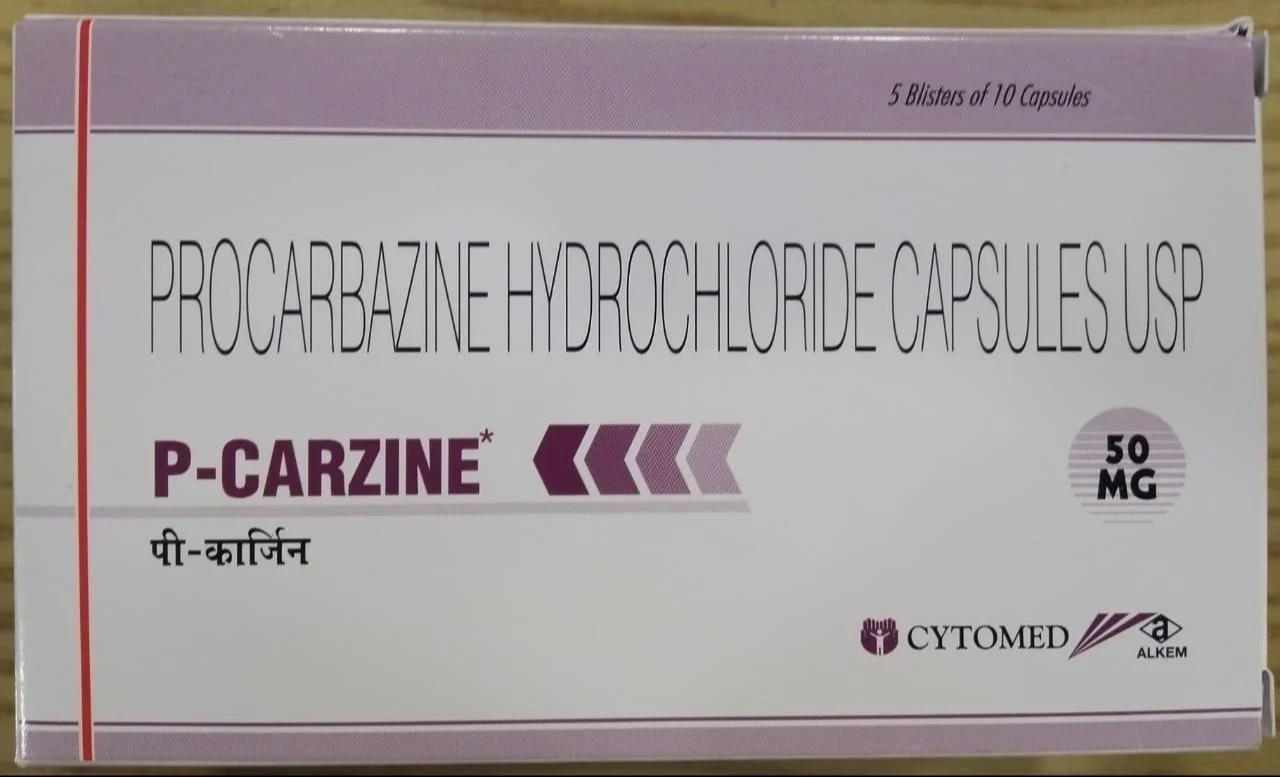
Price range: $55.00 through $149.00
| Active Ingredient | Procarbazine |
|---|---|
| Manufacturer | Alkem Laboratories Ltd |
| Packaging | 10 capsules in 1 strip |
| Strength | 50mg |
| Delivery Time | 6 To 15 days |
| SKU: | P Carzine 50 Mg (Procarbazine) |
P Carzine 50 Mg (Procarbazine): Uses, Dosage, Side Effects & Complete Guide
A cancer diagnosis changes everything. And when your doctor prescribes a chemotherapy medication, it’s completely natural to have questions — lots of them. What is this drug? How does it work? What side effects should I expect? Is it safe for me?
If P Carzine 50 Mg (Procarbazine) has been prescribed to you or a loved one, this guide is here to help you understand it — clearly, honestly, and without unnecessary medical jargon. Knowledge is one of the most powerful tools you have during cancer treatment, and we want to make sure you have it.
What Is P Carzine 50 Mg (Procarbazine)?
P Carzine 50 Mg is an oral chemotherapy capsule containing Procarbazine hydrochloride as its active ingredient. Each capsule contains 50 mg of Procarbazine — a potent anticancer agent that has been used in oncology for over five decades.
Procarbazine belongs to a class of chemotherapy drugs called alkylating agents — specifically, it is classified as a methylhydrazine derivative. It works by interfering with the DNA of cancer cells, preventing them from dividing and growing.
P Carzine 50 Mg is primarily used as part of combination chemotherapy regimens — meaning it is almost always given alongside other anticancer drugs rather than on its own. It is most famously a component of the well-known MOPP regimen (Mechlorethamine, Vincristine, Procarbazine, and Prednisone) and the BEACOPP regimen used in Hodgkin’s lymphoma treatment.
A Brief History of Procarbazine
Procarbazine has a long and well-established history in oncology. It was first synthesized in the 1960s and approved for clinical use shortly after. For decades, it was a cornerstone of Hodgkin’s lymphoma treatment and remains relevant today — particularly for patients with relapsed or refractory disease, or those undergoing high-dose chemotherapy protocols.
The fact that Procarbazine has remained in clinical use for over 50 years speaks to its proven effectiveness in specific cancer types, even as newer therapies have emerged.
How Does P Carzine 50 Mg (Procarbazine) Work?
Understanding how a chemotherapy drug works can help demystify the treatment process. Here’s a straightforward explanation:
Cancer cells are characterized by uncontrolled, rapid division. To divide, a cell needs to replicate its DNA — the genetic blueprint inside every cell. P Carzine 50 Mg (Procarbazine) works by damaging the DNA of cancer cells in multiple ways:
1. DNA Alkylation Procarbazine adds alkyl groups directly to the DNA strands of cancer cells. This chemically crosslinks the DNA strands, preventing them from being read or copied correctly. When the cell tries to divide, it cannot replicate its damaged DNA — and it dies.
2. Inhibition of DNA, RNA, and Protein Synthesis Procarbazine also inhibits the synthesis of DNA, RNA, and proteins — the three essential building blocks that a cell needs to survive and multiply. Without these, cancer cells cannot grow.
3. Free Radical Generation Procarbazine generates reactive oxygen species (free radicals) that further damage cancer cell DNA and membranes, accelerating cell death.
4. Weak MAO Inhibition Procarbazine also has mild monoamine oxidase (MAO) inhibitory properties — which is why it has important dietary and drug interactions (more on this later).
Because Procarbazine acts on DNA in multiple ways simultaneously, cancer cells find it very difficult to develop resistance to it — making it a durable and effective chemotherapy option.
What Is P Carzine 50 Mg (Procarbazine) Used For?
1. Hodgkin’s Lymphoma (Primary Use)
This is the most well-established and widely approved use of P Carzine 50 Mg (Procarbazine). Hodgkin’s lymphoma is a cancer of the lymphatic system — a part of the body’s immune network. Procarbazine is a key component of:
- MOPP regimen — one of the original curative chemotherapy protocols for Hodgkin’s lymphoma
- BEACOPP regimen — a more intensive modern protocol used for advanced-stage Hodgkin’s lymphoma
- COPP regimen — used in certain settings and countries
These combination regimens have achieved cure rates of 80–90% in early and intermediate-stage Hodgkin’s lymphoma — a remarkable achievement in oncology.
2. Brain Tumors (Gliomas)
P Carzine 50 Mg is also used in the treatment of primary brain tumors, particularly:
- Glioblastoma multiforme (GBM) — the most aggressive type of brain tumor
- Anaplastic astrocytoma
- Other high-grade gliomas
It is used here as part of the PCV regimen (Procarbazine, Lomustine/CCNU, and Vincristine), which has shown effectiveness in recurrent or resistant brain tumors and in certain low-grade gliomas that have progressed.
3. Non-Hodgkin’s Lymphoma (NHL)
In certain cases and combination regimens, Procarbazine is used for non-Hodgkin’s lymphoma, particularly in salvage (rescue) chemotherapy settings when other treatments have failed.
4. Other Cancers (Off-Label or Investigational)
Procarbazine has also been explored in:
- Lung cancer (small cell and non-small cell)
- Melanoma
- Multiple myeloma (in certain combination protocols)
- Medulloblastoma (brain tumor in children)
P Carzine 50 Mg Dosage Guide
Chemotherapy dosing is a precise science. The dose of P Carzine 50 Mg (Procarbazine) depends on your body surface area (BSA), the specific regimen being used, your organ function, and your overall health status. Always follow your oncologist’s prescribed dose exactly.
General Dosage (As Part of MOPP or Similar Regimen):
100 mg/m² per day orally for 14 days, repeated every 28 days (one cycle)
This means the daily dose is calculated based on your body surface area — your oncologist will determine the exact number of capsules you need.
Dose Modifications:
Your oncologist may reduce or delay your dose based on:
| Condition | Action |
|---|---|
| Low white blood cell count (WBC < 3,000/mm³) | Dose reduction or delay |
| Low platelet count (< 100,000/mm³) | Dose reduction or delay |
| Significant liver impairment | Use with caution; dose adjustment |
| Significant kidney impairment | Use with caution; dose adjustment |
| Severe nausea/vomiting | Supportive care; dose assessment |
| Neurological toxicity | Consider dose reduction or discontinuation |
How to Take P Carzine 50 Mg:
- Take capsules with or after food to reduce nausea
- Swallow capsules whole with a full glass of water
- Take at the same time each day during the prescribed treatment days
- Do not double up if a dose is missed — contact your oncologist
- Store at room temperature, away from moisture and heat
- Keep out of reach of children and pets — this is a cytotoxic medication
📌 Chemotherapy capsules are hazardous. Caregivers should wear gloves when handling P Carzine 50 Mg and wash hands thoroughly after.
Common Side Effects of P Carzine 50 Mg (Procarbazine)
Chemotherapy affects not only cancer cells but also some healthy, rapidly dividing cells in the body — which is the root cause of many side effects. Here’s what to expect:
Very Common Side Effects:
- Nausea and vomiting — most patients experience this, especially in the first few days of each cycle; anti-nausea medications (antiemetics) are usually prescribed alongside
- Loss of appetite — reduced desire to eat is common during treatment
- Fatigue — deep, persistent tiredness that is different from ordinary tiredness
- Myelosuppression — suppression of bone marrow activity, leading to:
- Low white blood cells (neutropenia) — increased infection risk
- Low red blood cells (anemia) — fatigue, breathlessness, pallor
- Low platelets (thrombocytopenia) — increased bleeding or bruising risk
- Mouth sores (mucositis) — painful ulcers inside the mouth
- Hair loss (alopecia) — partial or complete; usually temporary
- Skin sensitivity — rash, itching, or increased sun sensitivity
Moderate Side Effects:
- Diarrhea or constipation
- Dizziness or lightheadedness
- Headache
- Difficulty sleeping
- Muscle and joint pain
- Numbness or tingling in hands/feet (peripheral neuropathy)
- Mood changes or depression
- Dry mouth
Serious Side Effects (Contact Your Oncologist Immediately):
- Signs of infection — fever above 38°C (100.4°F), chills, sweating; this is a medical emergency in chemotherapy patients (febrile neutropenia)
- Unusual bleeding or bruising — from gums, nose, skin; blood in urine or stool
- Severe allergic reaction — rash with blistering, swelling of throat, difficulty breathing
- Lung toxicity (pneumonitis) — new or worsening cough, breathlessness, chest pain
- Neurological effects — confusion, hallucinations, seizures, severe headache
- Liver toxicity — jaundice (yellowing of eyes/skin), dark urine, severe abdominal pain
- Second malignancies — long-term use of alkylating agents carries a small increased risk of secondary cancers such as acute myeloid leukemia (AML)
⚠️ Any fever during chemotherapy is a medical emergency. Do not wait — go to your nearest emergency department immediately.
Critical Drug Interactions With P Carzine 50 Mg
This is one of the most important sections for anyone taking P Carzine 50 Mg (Procarbazine). Because Procarbazine has MAO inhibitory activity, it has a unique and extensive set of drug and food interactions that can be life-threatening if ignored.
Drug Interactions to AVOID:
| Drug / Category | Risk |
|---|---|
| Sympathomimetics (e.g., Ephedrine, Pseudoephedrine) | Severe hypertensive crisis |
| Antidepressants — SSRIs, TCAs, MAOIs | Risk of serotonin syndrome or hypertensive crisis |
| Meperidine (Pethidine) | Potentially fatal CNS toxicity — AVOID |
| Other CNS depressants (opioids, sedatives, alcohol) | Enhanced CNS depression |
| Antihypertensive drugs | Additive hypotensive effects |
| Levodopa | Risk of sudden hypertension |
| Insulin / Oral antidiabetics | Enhanced hypoglycemic effect |
| Other myelosuppressive agents | Additive bone marrow suppression |
| Live vaccines | Risk of severe infection — avoid during and shortly after chemotherapy |
Dietary Interactions — The Tyramine Connection:
Because Procarbazine inhibits MAO, it also interacts with tyramine-rich foods. Consuming these foods during treatment can trigger a sudden, dangerous spike in blood pressure (hypertensive crisis).
Foods to AVOID during P Carzine 50 Mg treatment:
- Aged cheeses (cheddar, parmesan, blue cheese, brie)
- Fermented or cured meats (salami, pepperoni, sausages)
- Pickled, fermented, or smoked fish
- Red wine, beer (especially tap beer), and other alcoholic beverages
- Overripe or dried fruits (raisins, figs, dates)
- Fermented soy products (soy sauce, miso, tofu, tempeh)
- Broad (fava) beans
- Yeast extracts (Marmite, Vegemite)
- Fermented or aged foods in general
🚨 This dietary restriction is serious and non-negotiable. Discuss a complete tyramine-restricted diet with your oncologist or a registered dietitian before starting treatment.
Who Should NOT Take P Carzine 50 Mg?
Procarbazine is a powerful chemotherapy agent with significant risks. It should be used with extreme caution or avoided in:
- Patients with known hypersensitivity to Procarbazine
- Patients with severely impaired bone marrow function not related to their cancer
- Patients with severe liver or kidney disease
- Pregnant women — Procarbazine is teratogenic (causes birth defects) and can harm the fetus. Highly effective contraception is mandatory during treatment
- Breastfeeding women — Procarbazine should not be used during breastfeeding
- Patients who have received recent radiation therapy or other myelosuppressive chemotherapy — risk of additive bone marrow toxicity
- Patients with active uncontrolled infection
- Patients with pre-existing neurological conditions that may be worsened
Important Precautions During P Carzine 50 Mg Treatment
1. Blood Count Monitoring Your oncologist will order regular blood tests (CBC) — typically before every cycle and sometimes mid-cycle. These monitor your white blood cells, red blood cells, and platelets. Never skip these tests.
2. Infection Prevention With a weakened immune system during treatment:
- Wash hands frequently and thoroughly
- Avoid crowded places and sick individuals
- Avoid raw or undercooked food
- Report any fever immediately — do not wait for a scheduled appointment
3. Fertility Considerations Procarbazine can cause permanent infertility in both men and women. If fertility preservation is important to you, discuss sperm banking or egg/embryo freezing with your oncologist before starting treatment.
4. Contraception Both male and female patients must use effective contraception during treatment and for a period after completing chemotherapy. The risk of fetal harm from Procarbazine is significant.
5. Sun Protection Procarbazine can increase photosensitivity. Wear sunscreen (SPF 30+), protective clothing, and limit sun exposure during treatment.
6. Alcohol — Absolute Avoidance Alcohol interacts with Procarbazine on multiple levels — both as an MAO interaction risk and as a CNS depressant. Alcohol must be completely avoided during P Carzine 50 Mg treatment.
7. Driving and Operating Machinery Procarbazine can cause dizziness, confusion, and neurological effects. Avoid driving or operating heavy machinery if you experience these symptoms.
Long-Term Considerations and Secondary Risks
It is important to be aware of the long-term effects associated with Procarbazine, especially when used as part of intensive regimens like BEACOPP:
- Secondary leukemia — alkylating agents carry a small but real risk of causing secondary acute myeloid leukemia (AML) years after treatment
- Gonadal toxicity — risk of infertility, early menopause in women, reduced sperm count in men
- Pulmonary toxicity — rare but possible lung damage with prolonged use
- Cardiovascular effects — risk varies depending on other agents used in the combination regimen
These risks are carefully weighed against the life-saving benefits of treating aggressive cancers like Hodgkin’s lymphoma. Your oncologist will discuss this risk-benefit balance with you in detail.
Frequently Asked Questions About P Carzine 50 Mg (Procarbazine)
Q: Can I eat normally while taking P Carzine 50 Mg?
Not entirely. You must follow a tyramine-restricted diet during treatment to avoid a dangerous hypertensive crisis. Your oncologist or dietitian will provide a detailed food list to avoid. In general, avoid aged, fermented, cured, or pickled foods.
Q: How long will I need to take P Carzine 50 Mg?
The duration depends on your specific treatment regimen and response. In MOPP-type protocols, Procarbazine is typically given for 14 days per 28-day cycle, over several cycles. Your oncologist will define your total treatment plan.
Q: Will my hair grow back after treatment?
In most cases, yes. Hair loss from chemotherapy is usually temporary, and hair typically begins to regrow within 3–6 months after completing treatment. The texture or color may sometimes change initially.
Q: Is P Carzine 50 Mg used in children?
Yes, Procarbazine is used in pediatric oncology, particularly for brain tumors and Hodgkin’s lymphoma in children and adolescents, as part of specific protocols. Dosing is carefully calculated based on body surface area.
Q: What should I do if I accidentally take too many capsules?
Seek emergency medical help immediately. Overdose symptoms may include severe nausea, vomiting, diarrhea, low blood pressure, tremors, seizures, and coma. Do not attempt to manage this at home.
Final Thoughts
P Carzine 50 Mg (Procarbazine) is a powerful and proven chemotherapy agent that has helped treat and cure thousands of patients with Hodgkin’s lymphoma, brain tumors, and other cancers over the past half-century. It is not an easy medication — it demands strict dietary restrictions, careful monitoring, and a committed partnership between you and your oncology team.
But it is also a medication that works. When used correctly, as part of a well-designed combination regimen and under close medical supervision, P Carzine 50 Mg plays a vital role in the fight against cancer.
If you have been prescribed P Carzine 50 Mg, lean on your healthcare team. Ask every question you have. Follow the dietary guidelines without compromise. Attend every blood test and follow-up appointment. And know that every capsule you take is a step in the right direction — toward remission, toward recovery, and toward life.
Disclaimer:-
This article is for informational and educational purposes only and does not constitute medical advice, diagnosis, or treatment recommendation. Always consult a qualified oncologist or healthcare professional before starting, stopping, or changing any chemotherapy medication, including P Carzine 50 Mg (Procarbazine).
Additional information
| unit | 50 Capsules, 100 Capsules, 150 Capsules |
|---|



Reviews
There are no reviews yet.