
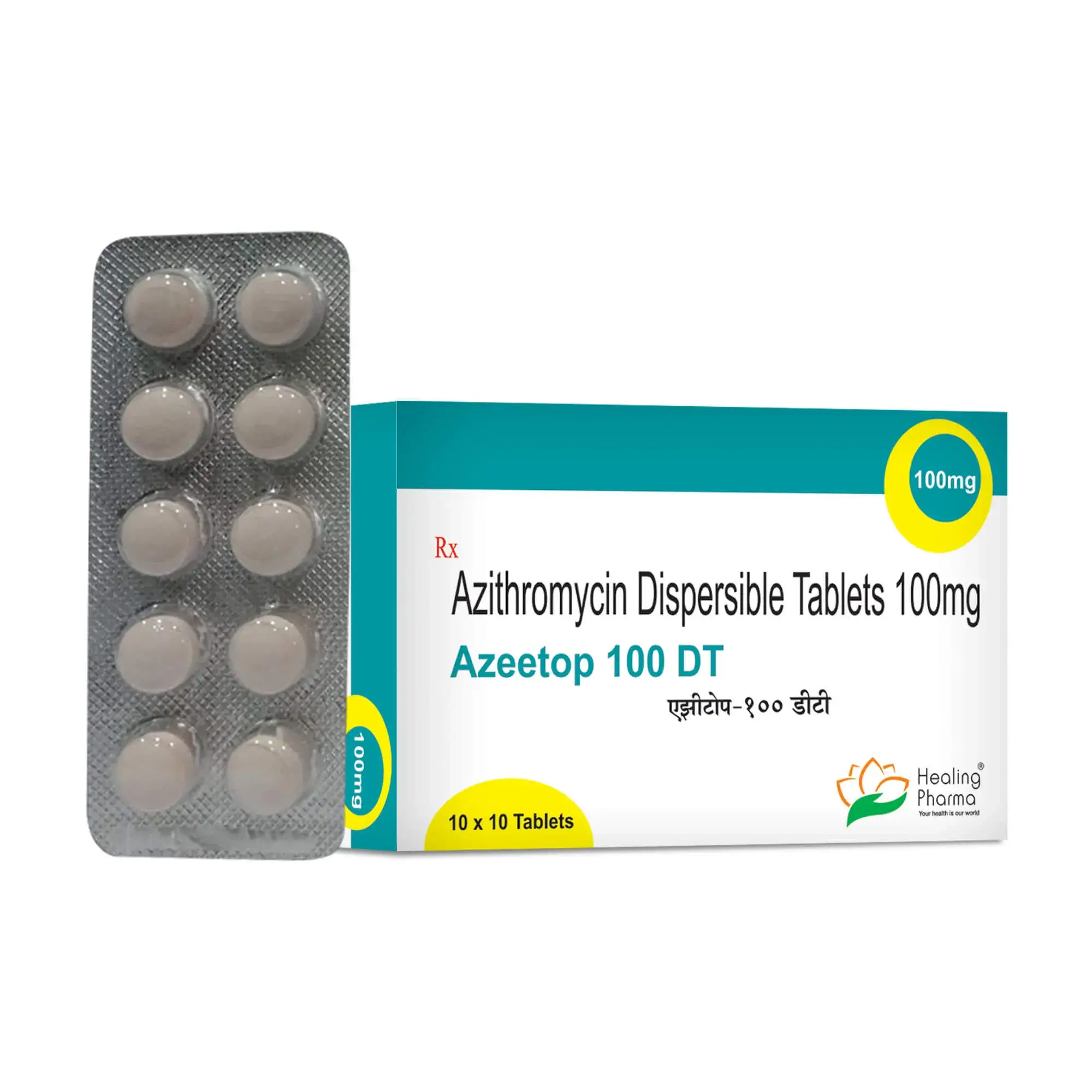
Azeetop 100 Dt
Price range: $37.00 through $93.00
| Active Ingredient | Azithromycin |
|---|---|
| Manufacturer | Healing Pharma, India |
| Packaging | 10 tablets in 1 strip |
| Strength | 100mg |
| Delivery Time | 6 To 15 days |
| SKU: | Azeetop 100 Dt |
Azeetop 100 DT – Complete Product Information
What is Azeetop 100 DT?
Azeetop 100 DT is a pharmaceutical formulation containing azithromycin as its active ingredient. Azithromycin belongs to a class of antibiotics known as macrolides, which are widely used in clinical practice to address various bacterial infections affecting different body systems.
This medication is manufactured under strict quality control standards and is available through licensed pharmacies with a valid prescription from a qualified healthcare provider. The “100” designation indicates that each tablet contains 100 milligrams of azithromycin, while “DT” stands for “Dispersible Tablet,” meaning the tablet is designed to be dissolved in water before administration, making it particularly suitable for pediatric use or for individuals who have difficulty swallowing conventional tablets.
Azeetop 100 DT is prescribed by healthcare professionals after comprehensive assessment of the patient’s condition, medical history, age, weight (particularly important in pediatric dosing), and the specific bacterial infection requiring treatment.
Active Ingredient: Azithromycin 100 mg
Drug Class: Macrolide antibiotic
Prescription Status: Prescription required
Available Forms: Dispersible Tablets (DT)
Primary Use Category: Antibacterial agent for susceptible infections
How Azeetop 100 DT Works
Azeetop 100 DT works through a specific mechanism that targets bacterial protein synthesis, which is essential for bacterial growth, reproduction, and survival. Understanding this mechanism helps clarify why this medication is effective for bacterial infections.
Mechanism of Action:
Bacteria, like all living organisms, require proteins to carry out essential life functions, maintain their structure, and reproduce. Bacteria produce these proteins through a complex process involving specialized cellular structures called ribosomes. Specifically, bacterial ribosomes consist of two subunits—a 50S subunit and a 30S subunit—that work together to translate genetic information into functional proteins.
Azithromycin works by binding reversibly to the 50S ribosomal subunit of susceptible bacteria. This binding occurs at a specific site that interferes with the bacterial ribosome’s ability to carry out protein synthesis. When azithromycin is bound to the ribosome, the bacteria cannot properly assemble the amino acid chains that form proteins.
Bacteriostatic and Bactericidal Effects:
Azithromycin is primarily considered bacteriostatic at standard concentrations, meaning it prevents bacteria from reproducing and growing by inhibiting their ability to make essential proteins. However, at higher concentrations or against particularly susceptible bacteria, it can also exhibit bactericidal (bacteria-killing) properties. By preventing bacterial reproduction, azithromycin allows the body’s natural immune system to eliminate the infection more effectively.
Spectrum of Activity:
Azithromycin demonstrates activity against a broad range of bacteria, including:
- Many gram-positive bacteria
- Several gram-negative bacteria
- Certain atypical bacteria that may not respond to some other antibiotic classes
- Some intracellular bacteria
However, not all bacterial species are susceptible to azithromycin, which is why healthcare providers consider the likely bacterial cause and local resistance patterns when prescribing.
Tissue Penetration and Distribution:
One notable characteristic of azithromycin is its excellent tissue penetration. After absorption, the medication distributes widely throughout the body, achieving particularly high concentrations in certain tissues including:
- Respiratory tract tissues
- Skin and soft tissues
- Reproductive tract tissues
- Middle ear tissues
These high tissue concentrations, often exceeding blood levels, contribute to the medication’s effectiveness for infections in these areas.
Long Half-Life and Sustained Effect:
Azithromycin has an exceptionally long half-life in tissues, meaning it remains in the body for an extended period after administration. This characteristic allows for shorter treatment courses compared to many other antibiotics—sometimes as brief as 3-5 days—while still providing sustained antibacterial effects. The medication continues working even after the last dose is taken, as tissue levels remain therapeutically active for several days.
Dispersible Tablet Advantage:
The dispersible formulation of Azeetop 100 DT offers specific advantages. When dissolved in water, the medication can be more easily administered to children who cannot swallow tablets, allows for more flexible dosing adjustments based on body weight, and may offer more predictable absorption in some cases.
Key Benefits and Expected Outcomes
When prescribed appropriately by healthcare professionals for confirmed or suspected bacterial infections, Azeetop 100 DT offers several therapeutic advantages:
Broad Antibacterial Coverage: Healthcare providers may consider this medication for bacterial infections affecting multiple body systems including respiratory tract infections, ear infections, skin and soft tissue infections, and certain other bacterial concerns in pediatric and adult populations.
Pediatric-Friendly Formulation: The dispersible tablet format makes administration to children significantly easier. Parents can dissolve the tablet in a small amount of water, creating a suspension that children can drink, avoiding the challenges of swallowing pills or the sometimes unpleasant taste of liquid suspensions.
Convenient Dosing Schedule: Due to its long tissue half-life, azithromycin often requires only once-daily dosing, which is simpler for families to manage compared to antibiotics requiring multiple daily doses. Additionally, many azithromycin regimens involve shorter treatment courses (3-5 days) compared to the 7-10 day courses required for many other antibiotics.
Excellent Tissue Penetration: The medication’s ability to achieve high concentrations in tissues where infections commonly occur contributes to its effectiveness for respiratory, ear, skin, and other infections.
Established Safety Profile: Azithromycin has been used extensively in both pediatric and adult populations for decades, with well-documented safety and efficacy when used appropriately.
Generally Well-Tolerated: Many patients, including children, tolerate azithromycin well when used as directed under medical supervision, though individual responses vary.
Food Flexibility: Unlike some antibiotics that must be taken on an empty stomach or with food, azithromycin can generally be taken without strict food requirements, offering scheduling flexibility.
Important Considerations:
- Results vary based on individual factors including infection type, bacterial susceptibility, patient age, overall health status, and adherence to prescribed regimens
- Complete course essential even when symptoms improve before medication is finished
- Not effective for viral infections such as common colds, flu, or most cases of bronchitis
- Professional assessment determines appropriateness for each individual situation
- Resistance concerns require judicious use only when bacterial infection is confirmed or strongly suspected
How to Take Azeetop 100 DT
General Usage Guidelines:
Azeetop 100 DT should only be taken exactly as prescribed by your healthcare provider. The following represents general information about medication administration, not personalized medical advice:
Preparation of Dispersible Tablets:
- Place the prescribed number of tablets in a clean glass or cup
- Add approximately 2 tablespoons (30 mL) of clean water
- Allow tablets to disperse (dissolve) completely—this typically takes 1-2 minutes
- Stir gently if needed to ensure complete dispersion
- Drink the entire mixture immediately
- Add a small amount of additional water to the glass, swirl, and drink to ensure you’ve received the complete dose
Administration Timing:
- Can be taken with or without food
- Take at approximately the same time each day for consistent blood levels
- If the medication causes stomach upset, taking with food may help
- Complete the full prescribed course even if symptoms improve
For Caregivers Administering to Children:
- Ensure child drinks the entire dispersed tablet mixture
- May add a small amount of flavored liquid after dispersion if needed to improve palatability (check with pharmacist)
- Never mix with large amounts of liquid, as child may not finish the full dose
- Administer within 30 minutes of preparation
- Watch child to ensure complete consumption
Missed Dose Instructions:
- Take as soon as you remember if it’s the same day
- If you don’t remember until the next dose is due, skip the missed dose
- Never double doses to compensate for a missed one
- Contact healthcare provider if multiple doses are missed
Treatment Duration:
- Azithromycin courses are typically 3-5 days, though duration varies by infection type
- Complete the entire prescribed course even when feeling better
- Symptoms often improve before all bacteria are eliminated
- Stopping early may lead to infection recurrence or antibiotic resistance
Special Instructions:
- Maintain good hydration during treatment
- Inform healthcare provider if symptoms don’t improve within 2-3 days
- Report any concerning side effects or allergic reactions immediately
- Keep track of doses given, especially when treating children
Storage Before Use:
- Keep tablets in original packaging until ready to use
- Do not prepare dispersed mixture in advance—prepare fresh each time
Important: Only your healthcare provider can determine the appropriate number of tablets, dosing frequency, and treatment duration for your specific situation. Pediatric dosing is carefully calculated based on body weight and requires professional medical determination.
Available Strengths and Formulations
Azeetop Available Strengths:
While this product page focuses on Azeetop 100 DT, azithromycin-based medications are available in various strengths and formulations to accommodate different patient needs:
Dispersible Tablets:
- Azeetop 100 DT: 100 mg dispersible tablets, primarily for pediatric use
- Other DT strengths: May include 250 mg dispersible tablets in some markets
Conventional Tablets:
- 250 mg tablets: Common strength for adult and older pediatric patients
- 500 mg tablets: Higher strength for adult use
- 600 mg tablets: Available in some formulations
Capsules:
- 250 mg capsules: Alternative oral solid dosage form
- 500 mg capsules: Higher strength capsule form
Oral Suspension:
- 100 mg/5 mL: Liquid formulation for young children
- 200 mg/5 mL: Higher concentration liquid formulation
- Powder for reconstitution that pharmacist prepares
Other Formulations:
- Single-dose packets: Pre-measured powder for suspension
- Extended-release formulations: For specific indications
- Intravenous formulations: For hospitalized patients (not for home use)
Combination Products:
Azithromycin is typically used alone rather than in fixed combinations, though it may be prescribed alongside other medications when healthcare providers determine combination therapy is appropriate.
Alternative Brands:
Several manufacturers produce azithromycin formulations under different brand names. The active ingredient and strength remain the same, though inactive ingredients may vary. Common brand names include Zithromax, Azithral, and others, alongside numerous generic formulations.
Generic Availability:
Azithromycin is widely available as generic medication, which contains the same active ingredient in the same strength and is generally considered therapeutically equivalent to branded versions when manufactured to appropriate quality standards.
Substitution Considerations:
While different azithromycin formulations are generally interchangeable in terms of active ingredient, the dispersible tablet formulation offers specific advantages for pediatric use. Any changes between formulations should occur with healthcare provider approval and pharmacist guidance.
Possible Side Effects
Like all medications, Azeetop 100 DT may cause side effects in some individuals, though not everyone experiences them. Understanding potential effects helps you recognize what to monitor and when to seek medical attention.
Common Side Effects (Mild to Moderate):
These effects occur in a notable percentage of users but are generally manageable:
- Gastrointestinal effects: Nausea, vomiting, diarrhea, abdominal pain or cramping—the most common side effects
- Loss of appetite: Reduced desire to eat, particularly in children
- Stomach upset: General digestive discomfort
- Headache: Usually mild and self-limiting
- Dizziness: Typically mild and transient
In children specifically:
- Stomach pain or discomfort
- Diarrhea (usually mild)
- Irritability or fussiness
- Sleep disturbances
Most common side effects are mild, self-limiting, and resolve after treatment completion. Gastrointestinal effects can often be minimized by taking the medication with food.
Less Common but Notable Side Effects:
- Skin rash: Mild rash may occur; report to healthcare provider
- Taste changes: Altered taste perception
- Vaginal yeast infections: In females due to disruption of normal bacterial balance
- Fatigue or weakness: General feeling of tiredness
- Nervousness or anxiety: Mood changes in some individuals
Serious Side Effects (Require Immediate Medical Attention):
While uncommon, certain symptoms require prompt professional evaluation:
- Severe allergic reactions: Difficulty breathing, throat swelling, severe skin reactions, widespread hives, or facial swelling
- Severe skin reactions: Stevens-Johnson syndrome, blistering, peeling, or severe rash with fever
- Severe diarrhea: Persistent, watery, or bloody diarrhea which may indicate Clostridium difficile infection
- Liver problems: Yellowing of skin or eyes (jaundice), dark urine, persistent nausea, severe abdominal pain
- Cardiac effects: Irregular heartbeat, rapid heartbeat, chest pain, or fainting (rare but serious)
- Hearing changes: Hearing loss, ringing in ears, or hearing disturbances
- Severe stomach pain: Particularly if accompanied by nausea and vomiting
Cardiac Considerations:
Azithromycin has been associated with QT interval prolongation—a heart rhythm change visible on ECG. While serious cardiac events are rare, individuals with pre-existing heart conditions, those taking certain other medications, or those with electrolyte imbalances face higher risk. This is why healthcare providers consider cardiac history before prescribing.
Antibiotic-Associated Diarrhea:
Antibiotics can disrupt normal intestinal bacteria, sometimes leading to overgrowth of harmful bacteria like Clostridium difficile. If diarrhea becomes severe, persistent, or contains blood, seek medical attention rather than using anti-diarrheal medications without guidance.
Hypersensitivity Considerations:
Individuals with known allergies to azithromycin, other macrolide antibiotics (erythromycin, clarithromycin), or any tablet components should not use this medication. Always inform healthcare providers of any previous allergic reactions to antibiotics.
Reporting Side Effects:
If you or your child experiences concerning symptoms while taking Azeetop 100 DT, contact your healthcare provider. Report serious adverse effects to your national drug safety monitoring system as well.
Safety Advice and Precautions
Before Taking Azeetop 100 DT:
Inform your healthcare provider about complete medical history, particularly:
Allergy Information:
- Previous allergic reactions to azithromycin, erythromycin, clarithromycin, or other macrolide antibiotics
- History of allergic reactions to any medications
- Known hypersensitivity to any ingredients in the formulation
Medical Conditions:
- Heart rhythm disorders or QT prolongation
- History of heart attack, heart failure, or other cardiac conditions
- Liver disease or impaired liver function
- Kidney disease (though usually doesn’t require dose adjustment)
- Myasthenia gravis (muscle weakness disorder)
- History of cholestatic jaundice or liver problems with previous azithromycin use
Electrolyte Imbalances:
- Low potassium levels (hypokalemia)
- Low magnesium levels (hypomagnesemia)
- Conditions or medications that may cause electrolyte imbalances
Pregnancy and Breastfeeding:
- Current pregnancy or pregnancy plans
- Breastfeeding status (azithromycin passes into breast milk)
- Healthcare providers assess benefits versus risks for pregnant or nursing individuals
Drug Interactions:
Azeetop 100 DT may interact with certain medications:
- Antacids containing aluminum or magnesium: May reduce azithromycin absorption; separate dosing by at least 2 hours
- Warfarin and other anticoagulants: Enhanced anticoagulant effects; monitoring may be needed
- Digoxin: Increased digoxin levels possible
- Ergot derivatives: Risk of ergot toxicity; combination generally avoided
- QT-prolonging medications: Increased risk of cardiac rhythm abnormalities when combined
- Cyclosporine: Increased cyclosporine levels
- Nelfinavir: May increase azithromycin levels
Medications That May Prolong QT Interval: Healthcare providers carefully consider the use of azithromycin with other QT-prolonging medications including certain:
- Antiarrhythmic drugs
- Antipsychotic medications
- Antidepressants
- Some antihistamines
- Certain antimalarial drugs
Special Populations:
- Pediatric patients: Dosing carefully calculated based on body weight; dispersible tablets facilitate accurate dosing
- Elderly patients: May be more susceptible to QT prolongation and cardiac effects
- Patients with hepatic impairment: Use with caution; monitoring may be needed
- Patients with severe renal impairment: Generally no dose adjustment required, but caution advised
Administration Precautions:
- Take the full prescribed course even when symptoms improve
- Do not save leftover medication for future use
- Do not share medication with others, even if they have similar symptoms
- Ensure complete dissolution before administration
- Watch for signs of allergic reaction, especially with first dose
Superinfection Risk:
Prolonged or repeated antibiotic use may result in overgrowth of non-susceptible organisms including fungi. If new infections develop during treatment (such as oral thrush or vaginal yeast infections), notify your healthcare provider.
Resistance Considerations:
Use azithromycin only when prescribed for bacterial infections. Inappropriate use contributes to antibiotic resistance, making future bacterial infections harder to treat.
Laboratory Test Considerations:
Azithromycin may affect certain laboratory test results. Inform laboratory personnel that you’re taking this medication.
Driving and Activities:
Dizziness or other side effects may affect ability to drive or operate machinery. Assess individual response before engaging in activities requiring alertness.
Storage Instructions
Proper storage maintains medication quality and effectiveness:
Storage Conditions:
- Store at room temperature, typically between 68°F to 77°F (20°C to 25°C)
- Brief exposure to temperatures between 59°F to 86°F (15°C to 30°C) is generally acceptable
- Keep in original blister packaging or container to protect from moisture
- Do not store in bathrooms where humidity fluctuates
- Protect from excessive heat and direct sunlight
Moisture Protection:
- Dispersible tablets are particularly sensitive to moisture
- Keep tablets in original moisture-protective packaging until ready to use
- Do not remove tablets from packaging until time of administration
- Do not store loose tablets or transfer to other containers
- If packaging becomes damaged, consult pharmacist about proper storage
Container Integrity:
- Keep blisters or containers tightly closed
- Do not puncture blister packs until ready to use individual tablets
- Protect from light exposure
- Maintain child-resistant closures when applicable
Safety Measures:
- Keep out of reach of children and pets
- Store in a secure location to prevent accidental ingestion
- Keep away from food and beverages
- Store where you’ll remember daily doses but children cannot access
Prepared Suspension:
- Use dispersed tablet mixture immediately after preparation
- Do not prepare in advance and store
- Discard any portion not consumed within 30 minutes of preparation
Expiration and Disposal:
- Check expiration date before use; do not use expired medication
- Expired medication may have reduced effectiveness
- Dispose of expired or unused medication properly
- Utilize community medication take-back programs when available
- Do not flush down toilet or pour into drains unless specifically instructed
- Remove personal information from packaging before disposal
- Consult pharmacist for specific disposal guidance
Travel Considerations:
- Keep medication in original packaging during travel
- Maintain appropriate temperature conditions
- Protect from moisture exposure, especially in humid climates
- Carry prescription information
- Pack in carry-on luggage rather than checked bags
- Bring adequate supply for trip duration
Visual Inspection:
Before use, inspect tablets for any signs of damage, discoloration, or unusual appearance. If tablets appear abnormal, consult your pharmacist before use.
Frequently Asked Questions
How should I prepare Azeetop 100 DT for my child?
Preparing Azeetop 100 DT correctly ensures your child receives the full prescribed dose. Start by washing your hands thoroughly. Place the exact number of tablets prescribed for a single dose into a clean, dry glass or cup—not a full-size glass, but something smaller like a medicine cup or small juice glass. Add approximately 2 tablespoons (about 30 mL or 1 ounce) of clean, room-temperature water. Don’t use hot water, milk, juice, or other liquids unless specifically instructed by your healthcare provider or pharmacist. Allow the tablets to sit in the water for 1-2 minutes—they should disperse (break apart and dissolve) to form a cloudy suspension. You can stir gently if needed. Once fully dispersed, have your child drink the entire mixture immediately. Don’t let it sit, as the medication may settle. After your child drinks the mixture, add another small amount of water (about 1 tablespoon) to the same cup, swirl it around to capture any remaining medication, and have your child drink this rinse as well. This ensures they receive the complete dose. If your child has difficulty with the taste, you can offer a small amount of juice or flavored drink immediately after, but check with your pharmacist first. Never prepare the medication in advance—always make it fresh for each dose. Some parents find it helpful to use a syringe to draw up the dispersed medication and administer it directly into the child’s mouth, which can be more reliable than drinking from a cup for young children. If your child spits out or vomits the dose shortly after administration, contact your healthcare provider for guidance—don’t simply give another dose without professional advice.
Can Azeetop 100 DT be crushed or chewed instead of dispersed?
While Azeetop 100 DT tablets are specifically designed to be dispersed in water, some parents wonder if they can simply crush the tablet and mix it with food or have their child chew it. It’s best to use the medication as intended by dispersing it in water. The dispersible formulation is designed to break down in a specific way that supports proper absorption and minimizes taste issues. Crushing and mixing with food may alter the medication’s effectiveness, as certain foods might interfere with absorption. Additionally, the taste of crushed azithromycin can be quite bitter and unpleasant, making it harder to ensure your child takes the full dose. If your child absolutely refuses to drink the dispersed tablet mixture despite various attempts, contact your healthcare provider or pharmacist. They may suggest alternative formulations like oral suspension (liquid), different administration techniques, or in some cases, different antibiotics altogether. Some pharmacists can provide flavoring agents that can be added to the dispersed medication to improve palatability. Never alter how you give the medication without professional guidance, as this could affect treatment effectiveness. The dispersible tablet formulation was specifically chosen for a reason, and deviating from recommended preparation could compromise the treatment. If administration difficulties persist, have an open conversation with your healthcare provider about the challenges you’re facing—they’ve encountered similar situations before and can offer practical solutions.
Why is the treatment course only 3-5 days when other antibiotics require 7-10 days?
The shorter treatment duration with azithromycin compared to many other antibiotics often surprises parents and patients, but it’s based on the medication’s unique pharmacological properties. Azithromycin has an exceptionally long half-life in body tissues, meaning it remains in the body and continues working long after the last dose is taken. When you complete a 3-day or 5-day course of azithromycin, the medication continues exerting antibacterial effects for several days afterward—tissue concentrations remain therapeutically active for approximately 7-10 days total. This extended tissue retention allows shorter administration courses while achieving comparable or superior total antibiotic exposure compared to 10-day courses of other antibiotics. Additionally, azithromycin concentrates particularly well in infected tissues, often achieving concentrations many times higher than blood levels, which contributes to effectiveness despite shorter administration. The shorter course offers several advantages: improved adherence (it’s easier to complete a 3-day course than a 10-day one), reduced side effects from shorter exposure, less disruption to normal beneficial bacteria, and greater convenience for families. However, “shorter course” doesn’t mean the treatment is less rigorous—it’s simply designed differently based on the medication’s characteristics. It’s still absolutely essential to complete the full prescribed course, even though it may be only 3-5 days. Stopping after one or two days because symptoms improved will not provide adequate treatment and may contribute to antibiotic resistance. The healthcare provider has calculated the appropriate duration based on the infection type, your child’s weight, and other factors. Different infections may require different durations even with the same medication, so always follow the specific instructions provided for each treatment course.
What should I do if my child vomits shortly after taking Azeetop 100 DT?
If your child vomits shortly after taking a dose of Azeetop 100 DT, the appropriate response depends on the timing and circumstances. If vomiting occurs within 15-30 minutes of taking the medication, it’s likely that little to none of the dose was absorbed, and you may need to repeat the dose. However, if vomiting occurs more than 30 minutes after taking the medication, substantial absorption has likely occurred, and repeating the dose could result in overdosing. The safest approach is to contact your healthcare provider or pharmacist immediately rather than making this decision yourself. They can provide specific guidance based on the timing, whether your child appears to have retained any of the medication, and other factors. When you call, have information ready about exactly when the dose was given, when vomiting occurred, whether you saw any undissolved medication in the vomit, and your child’s current condition. In many cases, if vomiting occurred very soon after dosing, providers may recommend waiting 30-60 minutes to ensure the child’s stomach has settled, then administering a repeat dose. If vomiting occurred later or you’re uncertain, they may simply recommend continuing with the next scheduled dose as planned. If your child has persistent vomiting with multiple episodes, this could indicate either a reaction to the medication or illness severity requiring further evaluation—your healthcare provider needs to know. To minimize vomiting risk, try giving the medication with a small amount of food, ensure your child isn’t too full when taking it, and keep them relatively quiet for 30 minutes after administration. Some children tolerate medication better at certain times of day. If vomiting becomes a consistent problem with the medication, discuss this with your healthcare provider—alternative antibiotics or formulations may be considered.
Can I give Azeetop 100 DT with my child’s regular medications or vitamins?
Whether Azeetop 100 DT can be given simultaneously with your child’s regular medications or supplements depends on the specific products involved. Some medications and supplements interact with azithromycin, while others can be safely given together. The most important interaction to be aware of involves antacids containing aluminum or magnesium—these can significantly reduce azithromycin absorption if taken at the same time. If your child takes antacids, administer azithromycin at least 1 hour before or 2 hours after the antacid. Most routine pediatric vitamins can generally be given with azithromycin without significant interaction, though it’s still wise to separate them by an hour or two when possible. If your child takes prescription medications for chronic conditions—such as medications for asthma, ADHD, seizures, or any other condition—you must inform the prescribing healthcare provider about all of these medications before starting azithromycin. Some medications may interact with azithromycin in ways that require dose adjustments, timing modifications, or additional monitoring. Iron supplements, calcium supplements, and multivitamins containing minerals are best given separately from azithromycin, preferably with at least a 2-hour gap. Probiotics, which some parents give to support digestive health during antibiotic treatment, should be given at different times from the antibiotic—typically separated by at least 2-3 hours. The antibiotic needs time to be absorbed before introducing bacteria (even beneficial ones) that the antibiotic might affect. Always maintain a complete, written list of everything your child takes regularly—prescription medications, over-the-counter medications, vitamins, supplements, and herbal products—and share this list with every healthcare provider. When starting any new medication, including Azeetop 100 DT, specifically ask about timing relative to other products your child takes. Your pharmacist is an excellent resource for questions about drug interactions and administration timing.
Is it normal for my child to have diarrhea while taking Azeetop 100 DT?
Mild diarrhea is a relatively common side effect of azithromycin and most antibiotics, affecting approximately 5-10% of children taking the medication. This occurs because antibiotics affect not only the harmful bacteria causing infection but also some of the beneficial bacteria normally present in the intestines. These beneficial bacteria help with digestion and maintain intestinal health, so their disruption can lead to loose stools or mild diarrhea. If your child develops mild diarrhea—meaning 2-3 loose stools per day without other concerning symptoms—this is generally not dangerous and will resolve after the antibiotic course is completed. Continue giving the medication as prescribed, ensure your child stays well-hydrated with plenty of fluids, and consider offering foods that are easier on the digestive system like bananas, rice, applesauce, toast, and yogurt with live cultures. However, you should contact your healthcare provider if diarrhea becomes severe (more than 5-6 watery stools per day), contains blood or mucus, is accompanied by severe abdominal cramping or fever, persists beyond the treatment course, or if your child shows signs of dehydration (decreased urination, dry mouth, lethargy, sunken eyes). Severe or bloody diarrhea could indicate Clostridium difficile infection or other serious conditions requiring medical attention. Never give your child anti-diarrheal medications like loperamide without healthcare provider approval, as these can sometimes worsen certain types of antibiotic-associated diarrhea. Some parents find that giving probiotics during and after antibiotic treatment helps reduce diarrhea, though these should be given at different times from the antibiotic dose—typically separated by at least 2-3 hours. Discuss probiotic use with your healthcare provider or pharmacist, as not all probiotics are appropriate for young children. If diarrhea is bothersome but not severe, continuing the medication is usually recommended since stopping antibiotics prematurely can lead to treatment failure and antibiotic resistance. Your healthcare provider can help you weigh the benefits of completing treatment against the discomfort of side effects.
Important Medical Information
Prescription Requirement: Azeetop 100 DT is a prescription antibiotic medication. This product information is educational only and does not replace professional medical advice, diagnosis, or treatment. Always consult qualified healthcare providers before starting, stopping, or modifying any medication regimen.
Individual Results Vary: Response to this medication depends on numerous factors including infection type, bacterial susceptibility, patient age and weight, overall health status, and adherence to prescribed regimens. No antibiotic is 100% effective for all patients in all circumstances.
Appropriate Use: Use antibiotics only when prescribed by healthcare professionals for confirmed or strongly suspected bacterial infections. Inappropriate antibiotic use contributes to resistance, reduces effectiveness for everyone, and exposes patients to unnecessary side effects.
Pediatric Dosing: Dosing for children is carefully calculated based on body weight and specific infection type. Never adjust doses or share medication between children without healthcare provider guidance.
Complete Course Essential: Always complete the full prescribed course even when symptoms improve. Incomplete treatment may lead to infection recurrence and contribute to antibiotic resistance.
Professional Guidance Required: Only licensed healthcare providers can determine whether Azeetop 100 DT is appropriate for your child’s or your specific situation, prescribe correct weight-based dosing, and monitor treatment progress.
Regulatory Compliance Statement: This information is provided for educational purposes in accordance with applicable pharmaceutical advertising and information dissemination regulations. Product availability, formulations, and regulatory status may vary by region. Always verify current prescribing information with local healthcare authorities and product labeling. This content is not intended to encourage self-medication or replace professional medical consultation. Antibiotic use should always occur under appropriate medical supervision.
Additional information
| unit | 60 Tablet, 120 Tablet, 180 Tablet |
|---|




Reviews
There are no reviews yet.