
Geftinat (Gefitinib) – 250 Mg
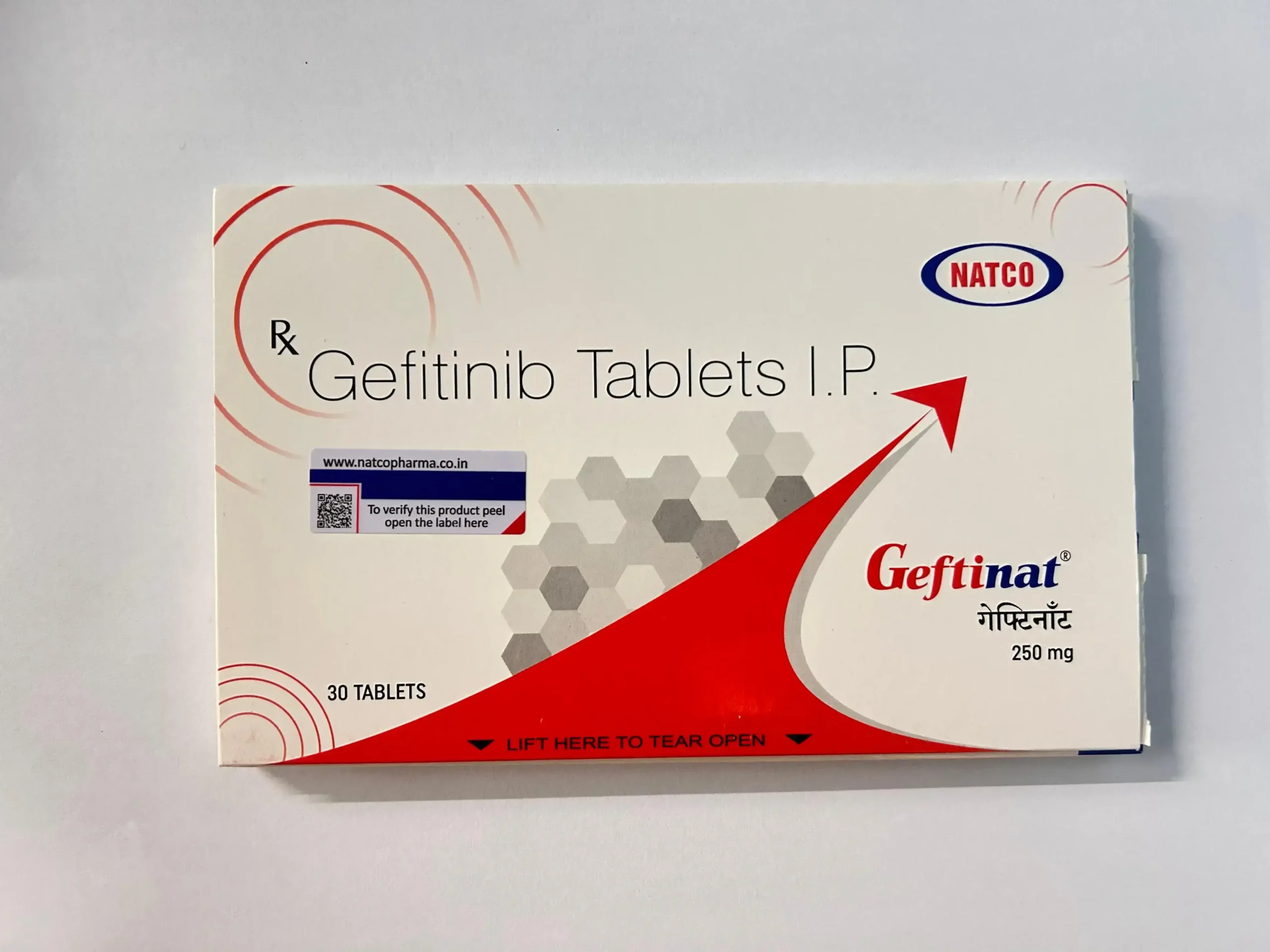
Price range: $309.00 through $999.00
| Active Ingredient | Gefitinib |
|---|---|
| Manufacturer | Natco Pharma, India |
| Strength | 250mg |
| Delivery Time | 6 To 15 days |
| SKU: | Geftinat (Gefitinib) – 250 Mg |
Geftinat (Gefitinib): Uses, Dosage, Side Effects, and Everything Patients Should Know
If you or someone you love has just been prescribed Geftinat (Gefitinib), you probably have a dozen questions running through your mind. What does this medicine actually do? Why did the doctor choose this over chemotherapy? What side effects should you watch for, and how do you take it correctly?
This guide walks through everything in plain language — no confusing medical jargon, just clear, honest information to help you feel more confident about the treatment ahead.
Note: This article is for educational purposes only and is not a substitute for professional medical advice. Always follow your oncologist’s instructions and read the official product information that comes with your medicine.
What Is Geftinat (Gefitinib)?
Geftinat is a branded version of Gefitinib, manufactured by Natco Pharma Ltd. It belongs to a class of targeted cancer drugs called EGFR tyrosine kinase inhibitors (EGFR-TKIs). It’s used primarily in the treatment of non-small cell lung cancer (NSCLC) — specifically in patients whose tumors carry certain mutations in the epidermal growth factor receptor (EGFR) gene.
Unlike traditional chemotherapy, which attacks all rapidly dividing cells in the body, Gefitinib is a targeted therapy. It’s designed to zero in on a specific abnormality driving the cancer’s growth, which is part of why it tends to come with a different (and often more manageable) side effect profile than conventional chemo.
Geftinat comes as a 250 mg tablet, and it’s one of several Indian brands of Gefitinib available — others include Geftib, Gefticip, Gefitero, and Geftistar — but Geftinat, made by Natco Pharma, is one of the most widely prescribed and trusted versions in India and for international patients seeking affordable generic access to this therapy.
How Does Gefitinib Work?
To understand why this drug matters, it helps to understand what’s going wrong in the cancer cell.
The epidermal growth factor receptor (EGFR) sits on the surface of cells and normally helps regulate how cells grow and divide. In certain lung cancers, mutations in the EGFR gene cause this receptor to become overactive — sending a constant “grow and multiply” signal to the cell, even when it shouldn’t. This uncontrolled signaling drives tumor growth.
Gefitinib works by binding to the ATP-binding site inside the EGFR’s tyrosine kinase domain, effectively jamming the signal. By blocking this pathway, it interrupts the cascade of signals (the Ras/MAPK pathway, among others) that would otherwise tell the cancer cell to keep dividing. This slows tumor growth and can also push cancer cells toward programmed cell death (apoptosis).
The two EGFR mutations that respond best to Gefitinib are:
- Exon 19 deletions
- Exon 21 L858R point mutations
Together, these two mutation types account for the vast majority of EGFR mutations found in NSCLC patients, which is why genetic testing (biomarker testing) is done before starting this medicine — Gefitinib works best, and is really only indicated, when this mutation is confirmed.
Who Should Take Geftinat (Gefitinib)?
Gefitinib is specifically approved for patients with:
- Locally advanced or metastatic non-small cell lung cancer (NSCLC)
- Tumors that test positive for EGFR exon 19 deletions or exon 21 (L858R) substitution mutations
It is not meant for lung cancers that don’t carry these mutations, and it isn’t a general cancer drug — this is a key reason your oncologist will order EGFR mutation testing (often through a biopsy or blood-based liquid biopsy) before prescribing it. Using it without a confirmed mutation typically won’t provide meaningful benefit, and it may still expose you to side effects without upside.
How to Take Geftinat: Dosage and Administration
Every patient’s situation is different, and your oncologist will give you dosing instructions specific to your case. That said, here’s the general pattern most patients follow:
- Standard dose: One 250 mg tablet, taken once daily
- With or without food: It can be taken either way — try to pick a time you’ll remember and stick with it
- Same time each day: Consistency helps maintain steady drug levels in your body
- Swallow whole: Don’t crush or chew the tablet. If swallowing tablets is difficult, it can be dispersed in about 4–8 ounces (half a glass) of plain (non-carbonated) water — stir until it disperses (it won’t fully dissolve) and drink immediately
- Antacids: Avoid taking antacids within 2 hours before or 1 hour after your dose, since they can reduce how well Gefitinib is absorbed
What If You Miss a Dose?
If you forget a dose, general guidance is to take it as soon as you remember, as long as it’s more than 12 hours before your next scheduled dose. If it’s closer to your next dose, skip the missed one entirely — never double up to “catch up.” When in doubt, call your treatment team; they’d rather answer a quick question than have you guess.
What If You Vomit After Taking It?
If you vomit within about an hour of taking your dose, contact your doctor for guidance — depending on timing, they may advise you to repeat the dose or simply wait for the next scheduled one.
Common Side Effects of Gefitinib
Most people tolerate Gefitinib reasonably well compared to conventional chemotherapy, but side effects are still common — most are mild to moderate (grade 1–2) and tend to show up within the first month of treatment.
The most frequently reported side effects include:
- Diarrhea — one of the most common effects; staying hydrated and eating smaller, bland meals can help
- Skin rash or dry, itchy skin — often on the face, chest, or scalp
- Nausea
- Loss of appetite
- Mouth sores (stomatitis)
- Fatigue or general weakness
- Elevated liver enzymes — usually picked up through routine blood work rather than felt directly
Many of these effects are manageable with supportive care — moisturizers and gentle skincare for rash, anti-diarrheal medication when appropriate, and dietary adjustments. Don’t stop the medication on your own if side effects appear; talk to your care team first, since dose adjustments or supportive treatments are often enough to keep you on therapy.
Serious Side Effects to Watch For
While less common, some side effects require prompt medical attention. Contact your doctor immediately if you notice:
- Sudden shortness of breath, new or worsening cough, or fever — these can be signs of interstitial lung disease (ILD), a rare but serious lung inflammation associated with Gefitinib. Treatment is typically stopped immediately if ILD is confirmed.
- Yellowing of the skin or eyes, dark urine, or severe abdominal pain — possible signs of liver problems
- Severe or persistent diarrhea that leads to dehydration
- Eye pain, redness, or vision changes
- Unusual bleeding
- Signs of a severe skin reaction — blistering, peeling skin, or a widespread rash
This isn’t meant to alarm you — serious reactions are relatively uncommon — but knowing the warning signs means you can act quickly if something feels wrong, rather than waiting it out.
Precautions Before Starting Geftinat
Before you begin treatment, make sure your doctor has a full picture of your health. Be sure to mention if you:
- Have a history of lung disease or interstitial lung disease
- Have liver problems
- Have a history of eye conditions, particularly corneal issues
- Are pregnant, planning to become pregnant, or breastfeeding — Gefitinib can harm a developing fetus and is not recommended during pregnancy or lactation
- Are taking other medications, including over-the-counter drugs, supplements, or antacids, since Gefitinib can interact with several drug classes (particularly those affecting stomach acid or liver enzyme pathways)
Women of childbearing potential are generally advised to use effective contraception during treatment and for a period after stopping, per their doctor’s guidance.
Geftinat vs. Other EGFR-TKI Brands
Since Gefitinib is available under several brand names in India — Geftinat (Natco Pharma), Geftib (Glenmark), Gefticip (Cipla), Gefitero (Hetero), and others — patients often wonder if there’s a meaningful difference between them.
In terms of the active ingredient, they’re all Gefitinib 250 mg and should work the same way pharmacologically, since generic drugs must meet regulatory bioequivalence standards. Differences mainly come down to:
- Price — brands can vary noticeably in cost
- Availability — some brands are easier to source in certain regions
- Manufacturer reputation and quality assurance practices
Geftinat, being manufactured by Natco Pharma — a well-established Indian pharmaceutical company known for oncology generics — has built a solid reputation among patients and oncologists for consistent quality and accessibility, particularly for patients seeking a more affordable alternative to the original branded version, Iressa.
If your doctor prescribes a specific brand, it’s generally best to stick with one brand throughout your treatment course rather than switching frequently, simply for consistency’s sake, though this is a conversation worth having with your treating physician or pharmacist.
Why Targeted Therapy Like Gefitinib Matters
For decades, chemotherapy was the default treatment for advanced lung cancer, regardless of the tumor’s underlying biology. The discovery of EGFR mutations, and the drugs designed to target them, changed that. Patients with EGFR-mutant NSCLC who take drugs like Gefitinib often see:
- Higher response rates compared to standard chemotherapy in the first-line setting
- Better tolerability, since the drug is more selective in what it attacks
- Improved quality of life during treatment, thanks to fewer of the harsher chemotherapy side effects like severe nausea or hair loss
Of course, no cancer drug works forever. Many patients eventually develop resistance to Gefitinib, often due to a secondary mutation called T790M, or through other resistance pathways. When this happens, your oncologist may switch you to a newer-generation EGFR-TKI or a different treatment strategy altogether. This is exactly why regular follow-up scans and, sometimes, repeat biopsies or blood tests are part of ongoing care — catching resistance early allows for a timely change in strategy.
Geftinat vs. Iressa: Understanding the Cost Difference
Gefitinib was originally developed and sold under the brand name Iressa by AstraZeneca. Since the drug’s patent protections have expired in many markets, Indian pharmaceutical companies like Natco Pharma have been able to produce generic versions — Geftinat being one of them — at a fraction of the cost.
This matters enormously in real-world terms. Targeted cancer therapies are often taken continuously for months or years, and the cumulative cost of the original branded version can be prohibitive for many families. Generic Gefitinib brands like Geftinat have made this class of treatment accessible to a much wider group of patients globally, including many who import the medicine through legitimate international pharmacy channels after receiving a valid prescription and mutation-positive diagnosis.
It’s worth emphasizing that “generic” doesn’t mean “lesser.” Regulatory bodies require generic manufacturers to demonstrate that their product delivers the same active drug, at the same rate, in the same amount, as the reference medicine. What differs is the price, the packaging, and sometimes the inactive ingredients (fillers, coatings) — not the core therapeutic effect.
Storage and Handling
Proper storage helps ensure your medication stays effective throughout your treatment course:
- Store Geftinat tablets at room temperature, away from direct sunlight and moisture
- Keep the medication in its original packaging until you’re ready to take a dose
- Keep it out of reach of children and pets — this is a potent medication not intended for anyone other than the prescribed patient
- Don’t use tablets past their expiry date, and don’t transfer them to unlabeled containers, since mix-ups with other medications can be dangerous
- If you’re traveling, carry the medication in your hand luggage along with your prescription, in case you need to show documentation at security or customs
Diet, Lifestyle, and Gefitinib
There’s no single “Gefitinib diet,” but a few lifestyle habits can help you feel your best while on treatment:
- Eat smaller, more frequent meals if nausea or appetite loss becomes an issue, rather than forcing large meals
- Limit alcohol, since it can add stress to the liver, which is already working to metabolize the drug
- Avoid grapefruit and grapefruit juice unless your doctor says it’s fine — grapefruit is known to interfere with liver enzymes involved in metabolizing many medications, including some cancer therapies
- Stay physically active within your limits. Gentle walking or light activity, as tolerated, has been associated with better overall wellbeing during cancer treatment, though this should always be discussed with your care team based on your specific condition
- Prioritize sleep and stress management. Fatigue is a common side effect, and rest genuinely helps your body cope with treatment demands
None of these replace medical guidance — they’re simply supportive habits that many patients and oncology nutritionists find helpful alongside active treatment.
Living With Gefitinib Treatment: Practical Tips
A cancer diagnosis and daily medication schedule can feel overwhelming at first. A few practical habits can make the day-to-day easier:
- Set a daily reminder. Taking your dose at the same time each day supports consistent drug levels and makes it easier to build into your routine.
- Keep a symptom diary. Jot down anything unusual — even minor things like dry skin or mild diarrhea — so you have a clear record to share at your next appointment.
- Protect your skin. Use a gentle, fragrance-free moisturizer daily, and consider a mineral sunscreen, since some patients experience increased skin sensitivity.
- Stay hydrated. This helps with both general side effect management and overall wellbeing during treatment.
- Don’t skip follow-up appointments and blood tests. These help your care team catch liver enzyme changes or other issues early, often before you’d notice symptoms yourself.
- Loop in your support system. Whether it’s family, friends, or a patient support group for lung cancer, having people to talk to makes a real difference during long-term treatment.
Frequently Asked Questions
Is Geftinat the same as Gefitinib?
Yes. Geftinat is simply the brand name under which Natco Pharma manufactures and markets the drug Gefitinib.
Can Geftinat cure lung cancer?
Gefitinib is not a cure — it’s a treatment that can control and shrink EGFR-mutation-positive tumors, often significantly extending progression-free survival. Outcomes vary by individual, stage at diagnosis, and overall health.
How long do patients typically stay on Gefitinib?
This varies widely and depends on how well the cancer responds and how long that response lasts before resistance develops. Some patients remain on it for many months to a few years; your oncologist will monitor this through regular scans.
Can I take Geftinat without EGFR mutation testing?
This isn’t recommended. Gefitinib is specifically effective in EGFR mutation-positive cancers, and taking it without a confirmed mutation is unlikely to provide meaningful benefit.
Does Geftinat interact with antacids?
Yes — antacids can reduce Gefitinib’s absorption. It’s best to separate their use by at least a couple of hours from your dose, as advised by your doctor or pharmacist.
Is Geftinat safe during pregnancy?
No, it’s not recommended during pregnancy due to potential harm to the developing fetus. Discuss contraception and family planning with your oncologist before starting treatment.
Disclaimer:-
The information provided about Geftinat (Gefitinib) is intended for general educational purposes only and should not be considered a substitute for professional medical advice, diagnosis, or treatment. Geftinat (Gefitinib) is a prescription medicine and should be used only under the supervision of a qualified healthcare professional. Dosage and treatment duration may vary depending on the patient’s medical condition, treatment response, other medicines, and individual risk factors. Do not start, stop, or change treatment without consulting your doctor. Always follow the prescribing information and advice provided by your healthcare professional.
Additional information
| unit | 300 Tablet, 90 Tablet, 120 Tablet, 150 Tablet |
|---|




Reviews
There are no reviews yet.