
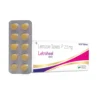
Letrozole 2.5 Mg

Price range: $85.50 through $225.00
| Active Ingredient | Letrozole |
|---|---|
| Manufacturer | Corona Remedies Private Limited |
| Packaging | 10 tablets in 1 strip |
| Strength | 2.5mg |
| Delivery Time | 6 To 15 days |
| SKU: | Letrozole (Letrozole) – 2.5 Mg |
Letrozole 2.5 Mg: Uses, Dosage, Side Effects & Complete Guide
Whether you are navigating a breast cancer diagnosis, working through fertility treatment, or managing a hormone-related condition — the medications your doctor prescribes can feel both hopeful and overwhelming at the same time. Understanding what each drug does, why it has been chosen for you, and what to expect from it can make an enormous difference in how confidently and safely you move through your treatment.
If Letrozole 2.5 Mg has been prescribed to you, this comprehensive guide is here to walk you through everything — from the science of how it works to the practical realities of daily life on this medication — clearly, honestly, and in genuinely human language.
What Is Letrozole 2.5 Mg?
Letrozole 2.5 Mg is an oral tablet containing Letrozole 2.5 mg as its active ingredient. It is one of the most widely prescribed hormonal medications in oncology and reproductive medicine worldwide — used across two very different but equally important clinical settings: breast cancer treatment and fertility induction.
Letrozole belongs to a class of drugs called aromatase inhibitors (AIs) — specifically a non-steroidal, third-generation aromatase inhibitor that works by blocking an enzyme called aromatase (also known as CYP19A1), which is responsible for producing estrogen in the body.
It was originally developed and approved specifically for breast cancer treatment — and remains one of the most effective hormonal therapies for postmenopausal women with estrogen receptor-positive (ER+) breast cancer. Over time, it found a second major clinical role as a fertility medication — particularly for ovulation induction in women with polycystic ovary syndrome (PCOS) and unexplained infertility.
Letrozole 2.5 Mg is manufactured by multiple pharmaceutical companies globally and is included on the World Health Organization’s List of Essential Medicines — a testament to its proven importance in global healthcare.
Understanding Estrogen’s Role — Why Blocking It Matters
Before exploring how Letrozole works, it helps to understand why estrogen is such a central target in both breast cancer treatment and fertility medicine.
In Breast Cancer: Approximately 70–80% of breast cancers are hormone receptor-positive (HR+) — meaning the cancer cells carry estrogen receptors (ER) and/or progesterone receptors (PR) on their surface. When estrogen binds to these receptors, it acts like a molecular switch — turning on signals that drive cancer cell growth and division. Blocking estrogen production therefore removes the fuel that powers these tumors.
In Fertility Treatment: Estrogen plays a regulatory role in the pituitary gland’s production of follicle-stimulating hormone (FSH) and luteinizing hormone (LH). When estrogen levels are artificially lowered — as Letrozole does — the pituitary gland responds by producing more FSH, which stimulates follicle development in the ovaries and promotes ovulation.
How Does Letrozole 2.5 Mg Work?
In Breast Cancer Treatment — Aromatase Inhibition
In postmenopausal women, the ovaries are no longer the primary source of estrogen. Instead, estrogen is produced in peripheral tissues — particularly fat tissue, muscle, the liver, and the adrenal glands — through a process called aromatization, where androgens (male hormones like testosterone and androstenedione) are converted into estrogen by the aromatase enzyme.
Letrozole works by competitively and reversibly binding to the heme group of aromatase — blocking the enzyme’s active site and preventing it from converting androgens into estrogen. The result:
- Plasma estrogen levels fall by 97–99% — an extraordinarily profound reduction
- Breast tumor cells that depend on estrogen for growth are effectively starved of their primary stimulus
- Cancer cell proliferation slows, halts, or reverses
- Tumor regression and reduced recurrence risk are achieved
This near-complete estrogen suppression makes Letrozole one of the most potent aromatase inhibitors available — and multiple large clinical trials have confirmed it produces superior outcomes compared to Tamoxifen (the primary alternative) in postmenopausal women with ER+ breast cancer.
In Fertility Treatment — Ovulation Induction
When used for fertility purposes, Letrozole is taken for a short course (typically 5 days) early in the menstrual cycle. By temporarily lowering estrogen levels, it removes estrogen’s negative feedback on the hypothalamus and pituitary gland. The pituitary responds by releasing more FSH (follicle-stimulating hormone) — which stimulates the ovaries to develop follicles and ultimately triggers ovulation.
Key advantages of Letrozole over the older fertility drug Clomiphene citrate (Clomid) for ovulation induction include:
- Shorter half-life — clears from the body quickly, reducing anti-estrogenic effects on the uterine lining and cervical mucus
- Better endometrial receptivity — the uterine lining is more favorable for implantation
- Lower multiple pregnancy rate — typically stimulates fewer follicles simultaneously
- Higher live birth rates in PCOS — established in the landmark NICHD PPCOSII trial
What Is Letrozole 2.5 Mg Used For?
1. Adjuvant Treatment of Early ER+ Breast Cancer in Postmenopausal Women
This is the most important and most widely used indication for Letrozole 2.5 Mg. Adjuvant therapy means treatment given after primary surgery (and/or radiation) to reduce the risk of cancer returning.
Letrozole is recommended as:
- First-line adjuvant hormonal therapy for postmenopausal women with ER-positive, HER2-negative early breast cancer
- Extended adjuvant therapy — for 5 additional years after completing 5 years of Tamoxifen (MA.17 trial); this extended use significantly reduces the risk of late recurrence
The BIG 1-98 clinical trial — one of the largest breast cancer trials ever conducted — demonstrated that Letrozole was significantly superior to Tamoxifen as upfront adjuvant therapy in postmenopausal women, reducing:
- Disease-free survival events by 19%
- Distant recurrence by 27%
- Risk of contralateral breast cancer
2. First-Line Treatment of Advanced/Metastatic ER+ Breast Cancer
Letrozole 2.5 Mg is a standard first-line hormonal therapy option for postmenopausal women with hormone receptor-positive advanced or metastatic breast cancer — particularly when used in combination with CDK4/6 inhibitors such as:
- Palbociclib (Ibrance) + Letrozole — PALOMA-2 trial; median PFS of 24.8 months
- Ribociclib (Kisqali) + Letrozole — MONALEESA-2 trial; significant OS improvement
- Abemaciclib (Verzenio) + Letrozole — MONARCH-3 trial
These CDK4/6 inhibitor + Letrozole combinations have transformed the treatment of metastatic ER+ breast cancer — dramatically extending progression-free and overall survival.
3. Ovulation Induction in Infertility (PCOS and Unexplained Infertility)
Letrozole 2.5 Mg is now the preferred first-line agent for ovulation induction in women with:
- Polycystic ovary syndrome (PCOS) — the most common cause of anovulatory infertility
- Unexplained infertility with anovulation or irregular cycles
- Women in whom Clomiphene citrate has failed
The NICHD PPCOSII trial (Legro et al., 2014) — the largest randomized trial comparing Letrozole and Clomiphene in PCOS — found that:
- Live birth rate with Letrozole: 27.5% vs. 19.1% with Clomiphene
- Ovulation rate with Letrozole: 61.7% vs. 48.3% with Clomiphene
- Letrozole achieved significantly better pregnancy and live birth outcomes
4. Neoadjuvant Therapy for ER+ Breast Cancer
In older or frail patients, or those unsuitable for immediate surgery, Letrozole is used as pre-surgical (neoadjuvant) therapy to shrink large ER+ breast tumors — potentially allowing breast-conserving surgery where mastectomy would otherwise be required.
5. Second-Line Breast Cancer After Tamoxifen
Letrozole is used as second-line hormonal therapy in postmenopausal women whose breast cancer has progressed after Tamoxifen therapy.
6. Endometriosis and Other Hormone-Sensitive Conditions
Letrozole is used off-label for endometriosis — reducing estrogen levels to suppress endometrial tissue growth — often in combination with progestins or GnRH agonists.
Letrozole 2.5 Mg Dosage Guide
Standard Doses by Indication:
| Indication | Dose | Duration |
|---|---|---|
| Adjuvant breast cancer treatment | 2.5 mg once daily | 5 years (or up to 10 years in extended adjuvant) |
| Extended adjuvant after Tamoxifen | 2.5 mg once daily | 5 additional years (MA.17 trial protocol) |
| Advanced/metastatic breast cancer | 2.5 mg once daily | Until progression or intolerance |
| Neoadjuvant breast cancer | 2.5 mg once daily | Typically 4–6 months pre-surgery |
| Ovulation induction (PCOS/infertility) | 2.5–7.5 mg daily | Days 3–7 (or Days 2–6) of menstrual cycle — 5 days |
| Endometriosis (off-label) | 2.5–5 mg daily | As directed by specialist |
Ovulation Induction Dosing Details:
- Starting dose: 2.5 mg/day for 5 days (Days 3–7 of cycle)
- If ovulation does not occur: dose may be increased to 5 mg/day in subsequent cycles
- Maximum dose: 7.5 mg/day for 5 days
- Ovarian follicle development is monitored by transvaginal ultrasound and timed intercourse or intrauterine insemination (IUI) is advised
How to Take Letrozole 2.5 Mg:
- Take with or without food — both are acceptable; consistency matters more than meal timing
- Take at the same time every day — maintaining consistent blood levels is important for hormonal therapy
- Swallow tablet whole with a full glass of water
- Taking at bedtime can help manage side effects like hot flashes and dizziness during sleeping hours
- Never skip doses in adjuvant therapy — consistent intake is fundamental to effectiveness
- If you miss a dose in adjuvant therapy, take it as soon as you remember on the same day; if the next day has arrived, skip it and resume your normal schedule
- For ovulation induction, follow your fertility specialist’s specific instructions precisely regarding timing
- Store at room temperature (below 30°C), away from moisture and direct sunlight
Common Side Effects of Letrozole 2.5 Mg
Letrozole’s side effects arise primarily from its profound estrogen-lowering effect — essentially creating a state of very low estrogen (a more pronounced form of menopause). Most side effects are manageable with proper support and monitoring.
Very Common Side Effects:
1. Hot Flashes and Night Sweats The most frequently reported side effect — affecting 50–60% of patients in breast cancer treatment. The sudden sensation of warmth, flushing, and sweating is a direct consequence of very low estrogen levels.
Management:
- Dress in breathable, layered clothing
- Keep the bedroom cool at night with a fan or air conditioning
- Avoid known triggers — caffeine, alcohol, spicy food, stress
- Non-hormonal prescription options — Venlafaxine, Gabapentin, or Clonidine — can provide significant relief if hot flashes are severe
- Hormonal replacement therapy (HRT) is generally contraindicated in breast cancer patients
2. Joint and Muscle Pain (Arthralgia and Myalgia) This is one of the most clinically significant and impactful side effects of aromatase inhibitors — and a major reason some patients discontinue treatment. It manifests as:
- Morning joint stiffness — particularly in hands, wrists, knees, and ankles
- Generalized aching muscles
- Carpal tunnel syndrome-like symptoms in some patients
Management:
- Regular gentle exercise (walking, swimming, yoga) is one of the most effective strategies
- Omega-3 fatty acid supplementation
- Non-steroidal anti-inflammatory drugs (NSAIDs) if not contraindicated
- Acupuncture — evidence-supported for AI-related joint pain
- If severe and significantly impacting quality of life, discuss switching to an alternative AI or Tamoxifen with your oncologist
3. Bone Loss (Osteopenia / Osteoporosis) Estrogen is critically important for maintaining bone density. The profound estrogen suppression caused by Letrozole accelerates bone mineral density (BMD) loss — increasing the risk of osteopenia, osteoporosis, and fractures with long-term use.
Management:
- Baseline DEXA scan (bone density measurement) before starting — and repeated every 1–2 years
- Calcium supplementation — 1,000–1,200 mg daily
- Vitamin D supplementation — 800–1,000 IU daily
- Regular weight-bearing exercise
- Bisphosphonate therapy (Zoledronic acid, Alendronate) — prescribed if bone density reaches osteoporotic levels or fracture risk is high
- Avoid smoking and excessive alcohol
4. Fatigue General tiredness is very commonly reported — both from the medication and from the underlying cancer or treatment context.
5. Vaginal Dryness and Sexual Dysfunction
- Vaginal dryness, itching, and discomfort
- Reduced libido
- Dyspareunia (painful intercourse) due to vaginal atrophy
Management:
- Non-hormonal vaginal moisturizers (Replens) and lubricants are safe and effective
- Discuss vaginal estrogen options with your oncologist — some low-dose local preparations may be considered in certain breast cancer patients after careful risk assessment
6. Mood Changes and Depression
- Low mood, mild depression, irritability
- Cognitive changes — “brain fog,” difficulty concentrating
- Discuss with your oncologist if mood changes are significant; psychological support, counseling, or medication may be appropriate
7. Headache
- Generally mild and most pronounced early in treatment
8. Nausea
- Usually mild; taking Letrozole with food or at bedtime helps
Serious Side Effects (Seek Medical Attention):
- Severe osteoporotic fracture — particularly vertebral, hip, or wrist fractures; report any new bone pain, back pain, or loss of height
- Cardiovascular events — Letrozole’s estrogen-lowering effect may unfavorably affect cardiovascular risk markers (cholesterol, endothelial function); monitor lipids regularly
- Elevated cholesterol (Hypercholesterolemia) — monitor fasting lipid panel; lifestyle modifications and statins may be needed
- Severe allergic reaction — rash with blistering, facial swelling, throat tightening, difficulty breathing; rare but requires emergency care
- Hepatotoxicity — rare; jaundice, dark urine, severe fatigue; monitor liver function if symptoms arise
- Severe depression or suicidal ideation — seek immediate mental health support; inform your oncologist
⚠️ Bone health and cardiovascular risk management are the two most important long-term safety considerations during Letrozole therapy. Do not skip your DEXA scans or lipid monitoring appointments.
Who Should NOT Take Letrozole 2.5 Mg?
- Patients with known hypersensitivity to Letrozole or any tablet component
- Premenopausal women for breast cancer treatment — Letrozole is only effective as adjuvant hormonal therapy in postmenopausal women (or premenopausal women who have achieved ovarian suppression with a GnRH agonist)
- Pregnant women — Letrozole is embryotoxic and teratogenic; it must not be used during pregnancy; reliable contraception is mandatory for premenopausal women taking Letrozole for any indication other than planned ovulation induction cycles
- Breastfeeding women — must stop breastfeeding before starting Letrozole
- Patients with severe hepatic impairment — Letrozole is extensively metabolized in the liver; use with caution; dose adjustment or avoidance may be necessary
- Patients with ER-negative breast cancer — Letrozole will not be effective in hormone receptor-negative tumors
Important Drug Interactions With Letrozole 2.5 Mg
Letrozole has a relatively clean drug interaction profile compared to many other cancer medications — but some important interactions exist:
| Drug / Category | Interaction | Recommendation |
|---|---|---|
| Tamoxifen | Concurrent use reduces Letrozole plasma levels; reduces aromatase inhibitor effectiveness | Use sequentially — not concurrently |
| Estrogen-containing products (HRT, oral contraceptives) | Directly counteract Letrozole’s estrogen-lowering effect | Avoid during Letrozole treatment |
| Strong CYP3A4 inducers (Rifampicin, Carbamazepine, St. John’s Wort) | May reduce Letrozole blood levels | Avoid or use with caution; monitor response |
| Strong CYP2A6 inhibitors (Tranylcypromine, Methoxsalen) | May increase Letrozole exposure | Monitor for increased side effects |
| Warfarin | Possible alteration of anticoagulant effect | Monitor INR; adjust Warfarin dose if needed |
| CDK4/6 inhibitors (Palbociclib, Ribociclib, Abemaciclib) | Used intentionally in combination — standard of care in metastatic setting | Doctor-directed; monitor blood counts and ECG (Ribociclib — QT risk) |
| Bisphosphonates (Zoledronic acid, Alendronate) | Used alongside Letrozole for bone protection — complementary | Generally safe; standard co-prescription for bone health |
| NSAIDs | Used for AI-related arthralgia management | Generally safe; monitor renal function with long-term use |
📌 Always inform your oncologist, fertility specialist, and pharmacist of every medication, supplement, and herbal product you are taking before starting Letrozole 2.5 Mg.
Letrozole 2.5 Mg vs. Tamoxifen: Understanding the Key Differences
Many patients — particularly postmenopausal women with ER+ breast cancer — are presented with a choice between Letrozole and Tamoxifen, or a sequential strategy. Here is a clear comparison:
| Feature | Letrozole 2.5 Mg | Tamoxifen 20 Mg |
|---|---|---|
| Drug Class | Aromatase inhibitor (AI) | SERM (Selective Estrogen Receptor Modulator) |
| Mechanism | Blocks estrogen production | Blocks estrogen receptors in breast tissue |
| Best for | Postmenopausal women | Premenopausal women; all ages |
| Estrogen reduction | 97–99% reduction | No significant reduction in levels |
| Bone density | Reduces bone density | Protective of bone (premenopause) |
| Endometrial cancer risk | No increase | Small increase |
| Blood clot risk | Minimal | Increased |
| Joint pain | Common and significant | Less common |
| Hot flashes | Common | Common |
| Cardiovascular | May raise cholesterol | Favorable effect on LDL |
| Vaginal dryness | More severe | Moderate |
| Clinical superiority | Superior in postmenopausal HR+ BC | Preferred in premenopausal women |
| Cost | Affordable (generic) | Very affordable |
Many guidelines now recommend starting with an aromatase inhibitor like Letrozole in postmenopausal women, with the option of sequencing (e.g., 2–3 years Tamoxifen then switching to Letrozole) depending on tolerability and clinical factors.
Frequently Asked Questions About Letrozole 2.5 Mg
Q: Can premenopausal women take Letrozole for breast cancer?
Yes — but only when combined with ovarian suppression using a GnRH agonist (e.g., Goserelin/Zoladex or Leuprolide/Lupron). Letrozole alone is not effective in premenopausal women because the ovaries still produce large amounts of estrogen that Letrozole cannot block. When ovarian function is suppressed, premenopausal women can benefit from Letrozole similarly to postmenopausal women. This combination (OFS + AI) is supported by the SOFT and TEXT trials.
Q: How long do I need to take Letrozole for breast cancer?
The standard duration is 5 years as adjuvant therapy. However, extended adjuvant therapy for an additional 5 years (total 10 years) is recommended for high-risk patients — based on the MA.17R trial showing further reduction in late recurrence. For metastatic disease, Letrozole is continued until disease progression or intolerance.
Q: Will Letrozole affect my fertility permanently?
When used for ovulation induction, Letrozole is taken for only 5 days per cycle and has no lasting effect on fertility. When used for breast cancer treatment, Letrozole itself does not directly cause permanent infertility — but the associated low estrogen state affects the reproductive system during use. Fertility after completing breast cancer treatment is complex and should be discussed with a reproductive specialist.
Q: Is joint pain from Letrozole permanent?
Joint and muscle pain from Letrozole is generally reversible — it typically resolves or significantly improves after stopping treatment. During treatment, it can often be managed with exercise, NSAIDs, supplements, and acupuncture. If joint pain is severely impacting quality of life, switching to an alternative AI (Anastrozole or Exemestane) or Tamoxifen may help — discuss this with your oncologist before making any changes.
Q: Can I take Letrozole 2.5 Mg for PCOS if I am not trying to get pregnant?
Letrozole for PCOS is specifically used for ovulation induction in women actively trying to conceive. It is not a standard treatment for managing other PCOS symptoms (irregular periods, acne, hair growth) when pregnancy is not the goal. Other medications are more appropriate for those purposes. If you have PCOS and are not trying to conceive, discuss the appropriate management with your gynecologist or endocrinologist.
Disclaimer:-
This article is for informational and educational purposes only and does not constitute medical advice, diagnosis, or treatment recommendation. Always consult a qualified oncologist, gynecologist, fertility specialist, or healthcare professional before starting, stopping, or modifying any treatment, including Letrozole 2.5 Mg.
Additional information
| unit | 300 Tablet, 90 Tablet, 120 Tablet, 150 Tablet |
|---|





Reviews
There are no reviews yet.