
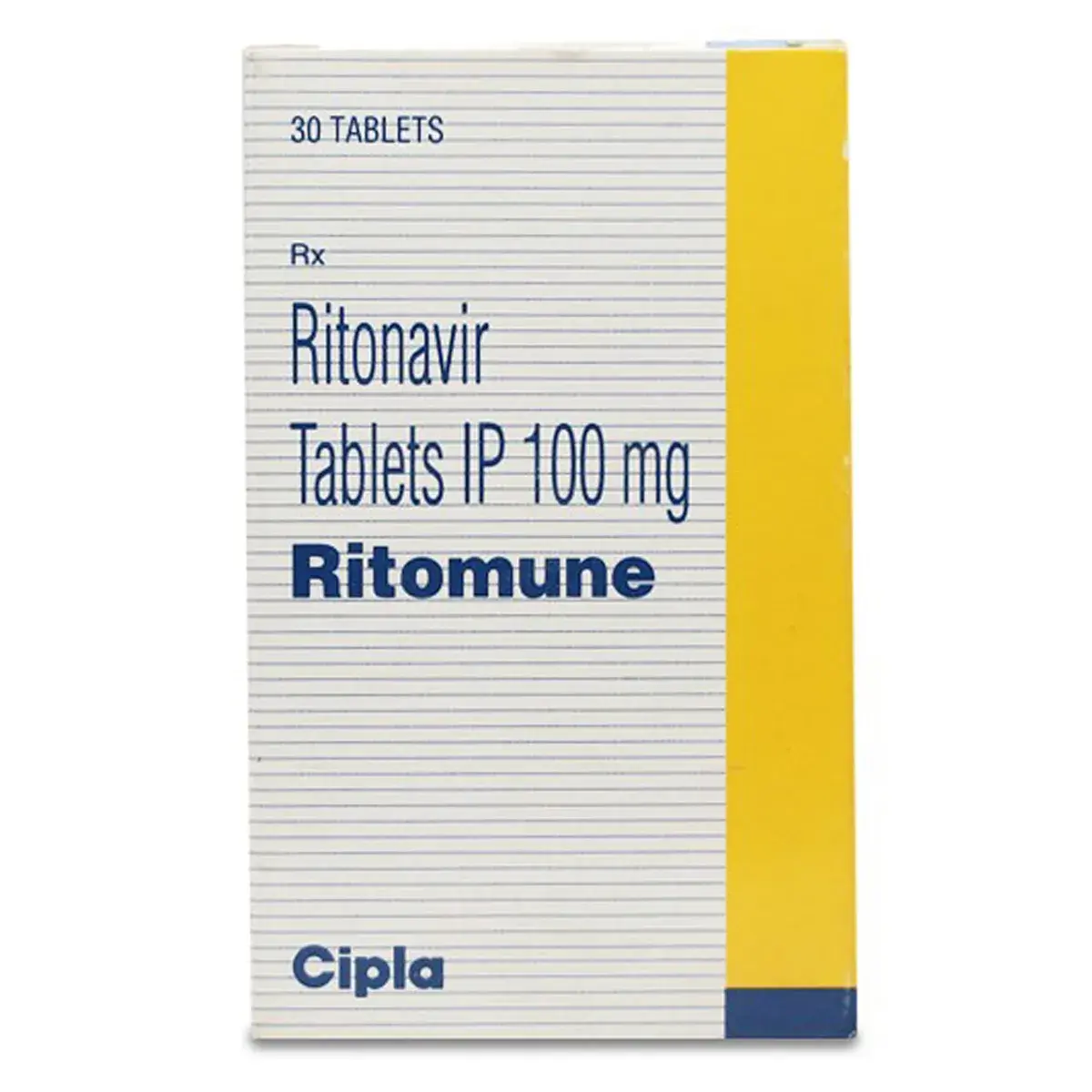
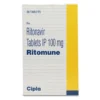
Ritomune (Ritonavir) – 100 Mg
Price range: $90.00 through $240.00
| Active Ingredient | Ritonavir |
|---|---|
| Manufacturer | Cipla Limited |
| Packaging | 60 Tablets in 1 box |
| Strength | 100gm |
| Delivery Time | 6 To 15 days |
| SKU: | Ritomune (Ritonavir) – 100 Mg |
Ritomune (Ritonavir) – 100 Mg: Uses, Dosage, Side Effects & Complete Guide
Managing HIV is a lifelong commitment — but with the right medications, it is absolutely possible to live a full, healthy, and meaningful life. The key lies in understanding your treatment, following it consistently, and knowing exactly what each medication in your regimen does and why it matters.
If Ritomune (Ritonavir) – 100 Mg has been prescribed as part of your HIV treatment, you may be wondering — what exactly does this drug do? Is it the main fighter against HIV, or does it serve a different purpose? What side effects should you watch for? How should you take it correctly?
This comprehensive guide answers every one of those questions — in clear, straightforward, and genuinely human language. No unnecessary jargon. Just the facts you need to understand Ritomune and use it safely and effectively.
What Is Ritomune (Ritonavir) – 100 Mg?
Ritomune is a brand name for Ritonavir 100 mg — an oral antiretroviral tablet used in the treatment of HIV-1 (Human Immunodeficiency Virus type 1) infection. It is manufactured by Cipla Ltd. — one of India’s most respected and globally recognized pharmaceutical companies — and is widely used across HIV treatment programs in India and internationally.
Each Ritomune tablet contains 100 mg of Ritonavir as the active ingredient.
Ritonavir belongs to the class of antiretroviral drugs called HIV protease inhibitors (PIs). However — and this is critically important to understand — in modern HIV treatment, Ritonavir is almost never used as the primary antiviral agent. Instead, it is used at a low, sub-therapeutic dose (100 mg) as a pharmacokinetic booster to enhance the effectiveness of other protease inhibitors in the same regimen.
This boosting role is so central to modern HIV therapy that you will frequently see Ritonavir written in combination regimens as “/r” — for example, Lopinavir/r, Atazanavir/r, Darunavir/r — where the “/r” represents the Ritonavir boost.
Ritomune (Ritonavir) – 100 Mg is therefore a cornerstone supportive agent in HIV combination antiretroviral therapy (cART) — making other HIV medications work better, last longer in the body, and require lower doses to achieve therapeutic effect.
A Brief History of Ritonavir
Ritonavir has a fascinating history in HIV medicine. When it was first approved by the FDA in 1996, it was used at full antiviral doses (600 mg twice daily) as a standalone protease inhibitor. At those doses, however, the side effects — particularly gastrointestinal — were severe and difficult for patients to tolerate.
Over time, researchers discovered something remarkable: even at very low doses (100 mg), Ritonavir could dramatically boost the blood levels of other protease inhibitors by inhibiting the liver enzyme that breaks them down. This discovery transformed Ritonavir’s role in HIV treatment — from a primary agent into a pharmacokinetic booster — and it has remained in this role ever since.
This evolution is a great example of how clinical science adapts and refines treatments over time to maximize benefit and minimize harm for patients.
How Does Ritomune (Ritonavir) – 100 Mg Work?
Ritonavir as a Pharmacokinetic Booster (Primary Modern Role)
When protease inhibitors like Lopinavir, Atazanavir, or Darunavir are taken orally, they are metabolized (broken down) in the liver and intestinal wall by an enzyme called CYP3A4 (Cytochrome P450 3A4). This natural breakdown process reduces the amount of the drug that remains active in the bloodstream — often quite significantly — limiting therapeutic effectiveness.
Ritonavir is a potent inhibitor of CYP3A4. By blocking this enzyme, Ritonavir slows the metabolism of the co-administered protease inhibitor, allowing it to reach higher blood concentrations and remain active for longer periods. This means:
- Higher peak drug levels of the primary protease inhibitor
- Prolonged drug half-life — the drug stays active longer in the body
- More consistent drug exposure throughout the dosing interval
- Reduced pill burden — because higher blood levels are maintained, lower doses of the primary PI can often be used
- Twice-daily or once-daily dosing becomes possible for drugs that would otherwise need more frequent dosing
This boosting effect is not just an added benefit — it is often essential for the primary protease inhibitor to work effectively at clinically manageable doses.
Ritonavir as a Protease Inhibitor (Secondary Mechanism)
At its 100 mg boosting dose, Ritonavir still retains some direct antiviral activity as a protease inhibitor. It works by binding to and inhibiting HIV-1 protease — the enzyme the virus needs to cleave its polyprotein precursors into functional proteins required for assembling new, infectious viral particles. Without functional protease, HIV produces only immature, non-infectious viral copies that cannot go on to infect new CD4+ T-cells.
However, this direct antiviral contribution at 100 mg is modest compared to its boosting function — the true value of Ritomune in modern regimens lies in its pharmacokinetic enhancement of co-administered protease inhibitors.
What Is Ritomune (Ritonavir) – 100 Mg Used For?
1. Pharmacokinetic Boosting in HIV Treatment (Primary Use)
Ritomune 100 Mg is primarily used to boost the blood levels of other HIV protease inhibitors in combination antiretroviral therapy. The most common combinations in which Ritonavir is used as a booster include:
- Lopinavir/Ritonavir (LPV/r) — used in treatment-naïve and treatment-experienced HIV patients; available as a fixed-dose combination (e.g., Lopimune)
- Atazanavir/Ritonavir (ATV/r) — once-daily boosted regimen widely used globally
- Darunavir/Ritonavir (DRV/r) — one of the most potent boosted PI regimens; used in both naïve and experienced patients
- Fosamprenavir/Ritonavir (FPV/r) — used in certain treatment-experienced settings
- Tipranavir/Ritonavir (TPV/r) — used for highly resistant HIV in heavily pretreated patients
- Saquinavir/Ritonavir (SQV/r) — used in specific clinical contexts
In all of these combinations, Ritomune 100 Mg is the booster — taken alongside the primary protease inhibitor to ensure optimal drug levels.
2. HIV-1 Treatment as Part of cART
As part of these boosted regimens, Ritomune contributes to the overall goal of combination antiretroviral therapy — which is to:
- Suppress HIV viral load to undetectable levels
- Allow CD4+ T-cell counts to recover and strengthen
- Prevent HIV-related opportunistic infections and complications
- Enable patients to live longer, healthier lives
- Reduce the risk of sexual HIV transmission (U=U: Undetectable = Untransmittable)
3. COVID-19 (Nirmatrelvir/Ritonavir — Paxlovid)
In a more recent development, Ritonavir’s boosting mechanism found a new application during the COVID-19 pandemic. Ritonavir is a key component of Nirmatrelvir/Ritonavir (Paxlovid) — an oral antiviral treatment for COVID-19 approved by the FDA and other regulatory bodies. Here, Ritonavir boosts blood levels of Nirmatrelvir (an anti-SARS-CoV-2 protease inhibitor) using the same CYP3A4 inhibition mechanism.
📌 Note: Ritomune (Ritonavir) – 100 Mg as a standalone tablet is used in HIV treatment. The COVID-19 application involves a separate co-packaged product (Paxlovid). Do not self-medicate for COVID-19 with standalone Ritonavir.
Ritomune (Ritonavir) – 100 Mg Dosage Guide
Dosing of Ritomune depends on its role in your specific antiretroviral regimen. Always follow your doctor’s prescription precisely — never self-adjust.
Standard Boosting Dose:
Ritonavir 100 mg once or twice daily, taken alongside the primary protease inhibitor as directed
Common Boosted PI Regimen Doses:
| Regimen | Ritonavir Dose | Primary PI Dose | Frequency |
|---|---|---|---|
| Darunavir/r (naïve) | 100 mg | Darunavir 800 mg | Once daily |
| Darunavir/r (experienced) | 100 mg | Darunavir 600 mg | Twice daily |
| Atazanavir/r | 100 mg | Atazanavir 300 mg | Once daily |
| Lopinavir/r | 100 mg (as part of fixed combo) | Lopinavir 400 mg | Twice daily |
| Tipranavir/r | 200 mg | Tipranavir 500 mg | Twice daily |
| Fosamprenavir/r | 100 mg | Fosamprenavir 700 mg | Twice daily |
📌 In fixed-dose combinations like Lopimune (Lopinavir/Ritonavir), Ritonavir is already included — you do not take separate Ritomune tablets. Your doctor will specify when separate Ritomune tablets are needed.
How to Take Ritomune 100 Mg:
- Take with food — food significantly improves absorption and reduces gastrointestinal side effects
- Swallow tablets whole with a full glass of water — do not crush or chew
- Take at the same time every day — consistency maintains stable drug levels critical for HIV suppression
- Never skip a dose — even feeling healthy doesn’t mean the virus is suppressed without medication
- If you miss a dose, take it as soon as you remember on the same day; if close to the next scheduled dose, skip the missed dose — never double up
- Store at room temperature (below 30°C), away from moisture, heat, and direct sunlight
How Long Does It Take Ritomune to Work?
Because Ritomune at 100 mg functions primarily as a pharmacokinetic booster rather than a standalone antiviral agent, its effectiveness is measured through the performance of the entire antiretroviral regimen it supports:
- Within 2–4 weeks of starting a Ritonavir-boosted regimen, viral load begins to drop significantly
- Within 3–6 months, most patients on a well-chosen, consistently taken regimen achieve undetectable viral load (< 50 copies/mL)
- CD4+ T-cell count begins recovering gradually — typically increasing by 100–150 cells/mm³ per year in the first 1–2 years of effective therapy
- Benefits of Ritomune’s boosting effect begin immediately with the first dose — from the very first tablet, Ritonavir starts inhibiting CYP3A4 and raising levels of the co-administered PI
Common Side Effects of Ritomune (Ritonavir) – 100 Mg
At the 100 mg boosting dose, Ritonavir is generally much better tolerated than at the older full antiviral doses (600 mg twice daily). However, side effects can still occur — particularly gastrointestinal ones — and some metabolic effects require monitoring.
Mild to Moderate Side Effects:
- Nausea — most commonly reported; usually mild at 100 mg dose
- Diarrhea — loose or frequent stools, particularly early in treatment
- Vomiting — generally mild; taking with food significantly reduces this
- Abdominal pain or discomfort — cramping or bloating
- Loss of appetite — reduced desire to eat, especially initially
- Taste disturbances (dysgeusia) — metallic or altered taste sensation
- Fatigue and weakness — general tiredness
- Headache — mild and typically transient
- Dizziness — occasionally reported
- Skin rash — mild rash may appear in the first few weeks
- Peripheral tingling or numbness — mild paresthesia around mouth or extremities
Most of these side effects are most pronounced in the first 2–4 weeks of treatment and improve significantly as the body adjusts.
Metabolic Side Effects (With Long-Term Use):
- Hyperlipidemia — elevated cholesterol and triglycerides; a well-recognized class effect of protease inhibitors including Ritonavir
- Hyperglycemia — elevated blood sugar; patients with diabetes or pre-diabetes require closer monitoring
- Lipodystrophy — body fat redistribution (fat loss in face and limbs; fat accumulation in abdomen or back of neck — “buffalo hump”)
- Elevated liver enzymes (transaminases) — particularly in patients co-infected with hepatitis B or C
- Elevated uric acid — gout risk may increase
Serious Side Effects (Seek Immediate Medical Attention):
- Severe hepatotoxicity — jaundice (yellowing of skin/eyes), dark urine, severe right-sided abdominal pain, extreme fatigue; liver failure has been reported, particularly in patients with pre-existing liver disease
- Pancreatitis — severe upper abdominal pain radiating to the back, nausea, vomiting, fever
- Severe allergic reaction — rash with blistering, facial swelling, throat tightening, difficulty breathing; seek emergency care immediately
- Cardiac arrhythmias (PR interval prolongation) — irregular heartbeat, palpitations, dizziness, fainting
- Severe skin reactions — Stevens-Johnson Syndrome or Toxic Epidermal Necrolysis (rare but serious)
- Immune Reconstitution Inflammatory Syndrome (IRIS) — when a recovering immune system overreacts to a pre-existing hidden infection (e.g., tuberculosis, CMV) — presenting as worsening symptoms shortly after starting ART
⚠️ Any jaundice, chest pain, severe abdominal pain, difficulty breathing, or severe rash requires immediate emergency medical attention. Do not wait.
Who Should NOT Take Ritomune (Ritonavir) – 100 Mg?
Ritomune is contraindicated or must be used with extreme caution in:
- Patients with known hypersensitivity to Ritonavir or any tablet excipient
- Patients taking certain contraindicated co-medications (see drug interactions below) — this is critically important with Ritonavir due to its potent CYP3A4 inhibition
- Patients with severe hepatic impairment (Child-Pugh Class C) — Ritonavir is contraindicated; risk of severe liver toxicity
- Patients with pre-existing cardiac conduction abnormalities (PR interval prolongation, AV block) — use with caution and monitoring
- Pregnant women — use only if clearly necessary and benefits outweigh risks; consult HIV and obstetric specialists; dosing adjustments during pregnancy may be needed
- Newborns under 1 month of age — safety not established in this age group
- Patients with active or decompensated liver disease, particularly those co-infected with hepatitis B or C — closely monitor liver function
Critical Drug Interactions With Ritomune
This is the most important section for patient safety. Because Ritonavir is a potent inhibitor of CYP3A4 and multiple other metabolic enzymes, it has an exceptionally extensive list of drug interactions — many of which can be life-threatening.
Drugs That Are ABSOLUTELY CONTRAINDICATED With Ritomune:
| Drug | Risk |
|---|---|
| Simvastatin / Lovastatin | Massive increase in statin levels — severe rhabdomyolysis (muscle destruction) risk |
| Oral Midazolam / Triazolam | Extreme sedation, respiratory depression — potentially fatal |
| Ergotamine / Dihydroergotamine | Severe vasospasm — risk of limb ischemia and gangrene |
| Pimozide | Life-threatening cardiac arrhythmia |
| Lurasidone | Serious CNS and cardiac toxicity |
| Ranolazine | Severe cardiac risk |
| Rifampicin | Dramatically reduces Ritonavir levels — complete treatment failure |
| St. John’s Wort (herbal) | Substantially reduces Ritonavir levels — treatment failure |
| Sildenafil (for pulmonary hypertension — Revatio) | Dangerous hypotension and visual disturbances |
| Alfuzosin | Severe hypotension |
| Amiodarone | Life-threatening cardiac arrhythmia |
| Flecainide / Propafenone | Cardiac arrhythmia risk |
Drugs Requiring Dose Adjustment or Close Monitoring:
| Drug | Interaction |
|---|---|
| Warfarin | INR changes — monitor closely |
| Atorvastatin / Rosuvastatin | Increased statin levels — use lowest effective dose |
| Methadone | Reduced Methadone levels — monitor for withdrawal |
| Oral contraceptives | Reduced effectiveness — use alternative/additional contraception |
| Rifabutin | Significant increase in Rifabutin levels — dose reduction required |
| Tacrolimus / Cyclosporine | Dramatically increased immunosuppressant levels — careful monitoring |
| Certain antiepileptics (Phenytoin, Carbamazepine) | Altered levels of both drugs |
| Sildenafil / Tadalafil (for erectile dysfunction) | Increased levels — use with extreme caution at lowest dose |
| Inhaled/nasal corticosteroids (Fluticasone) | Risk of Cushing’s syndrome — avoid combination if possible |
| Colchicine | Risk of serious colchicine toxicity — dose adjustment required |
🚨 This list is not exhaustive. ALWAYS provide your complete medication list — including all prescription drugs, over-the-counter medicines, supplements, and herbal products — to your HIV doctor and pharmacist before starting Ritomune. Drug interactions with Ritonavir can be life-threatening if not properly managed.
Important Precautions During Ritomune Treatment
1. Adherence Is Everything in HIV Treatment Ritonavir’s boosting function only works if it is taken consistently at the same time every day. Inconsistent dosing leads to fluctuating drug levels of the primary protease inhibitor — creating windows where the virus can replicate and potentially develop resistance mutations. Set phone reminders. Build a routine. Your long-term treatment success depends on it.
2. Regular Monitoring Schedule Your HIV specialist will schedule regular tests throughout treatment:
- Viral load — every 3–6 months (goal: undetectable)
- CD4+ T-cell count — every 3–6 months
- Liver function tests — baseline and periodically
- Fasting lipid panel — baseline and every 6–12 months
- Blood glucose — particularly important in patients with diabetes or prediabetes
- Complete blood count (CBC)
- Kidney function — particularly if tenofovir-based NRTIs are co-administered
3. Liver Health If you have co-existing hepatitis B or C infection, the risk of hepatotoxicity with Ritonavir is significantly elevated. Liver function must be monitored more frequently, and your doctor may recommend treating your hepatitis before or alongside your HIV therapy.
4. Cardiovascular Monitoring Long-term use of Ritonavir-boosted regimens is associated with elevated cholesterol and triglycerides. Lifestyle modifications — healthy diet, regular exercise, smoking cessation — and possibly lipid-lowering medications (with appropriate interaction checks) are important for long-term cardiovascular health.
5. Pregnancy and Breastfeeding HIV-positive women who are pregnant require specialized management by an HIV/obstetric specialist. Antiretroviral therapy during pregnancy — including Ritonavir-boosted regimens — is used for prevention of mother-to-child transmission (PMTCT), but dosing and regimen choices may differ from standard adult treatment. The drug does pass into breast milk; in resource-rich settings, formula feeding is recommended.
6. Medication Reviews Because Ritonavir interacts with such a large number of drugs, any time a new medication is prescribed — by any doctor, for any condition — your HIV specialist must be informed so interaction risks can be assessed.
Ritomune vs. Cobicistat: Two Pharmacokinetic Boosters Compared
Cobicistat (COBI) is a newer pharmacokinetic booster that was specifically designed to replicate Ritonavir’s CYP3A4 inhibition without any antiviral activity of its own. How do they compare?
| Feature | Ritomune (Ritonavir) 100 Mg | Cobicistat (150 Mg) |
|---|---|---|
| Mechanism of boosting | CYP3A4 inhibition | CYP3A4 inhibition |
| Direct antiviral activity | Mild (at 100 mg) | None |
| Drug interactions | Extensive | Similar (slightly fewer) |
| Renal effect | Minimal | Inhibits creatinine secretion (false elevation) |
| Available PIs boosted | Broad range | Atazanavir, Darunavir |
| Cost | Lower (generic available) | Higher |
| Long-term data | Extensive (decades) | Moderate |
| Fixed-dose combos | Yes (LPV/r, etc.) | Yes (Stribild, Genvoya, etc.) |
Both boosters are effective — choice between them depends on the specific PI being boosted, patient comorbidities, co-medications, and cost considerations.
Frequently Asked Questions About Ritomune (Ritonavir) – 100 Mg
Q: Is Ritomune the main HIV drug in my regimen?
In most modern regimens, no. Ritomune (Ritonavir) at 100 mg serves as a pharmacokinetic booster — it enhances the effectiveness of your primary protease inhibitor rather than acting as the main antiviral agent itself. The primary HIV-fighting work is done by the protease inhibitor it boosts, alongside your nucleoside reverse transcriptase inhibitors (NRTIs).
Q: Can I take Ritomune with food?
Yes — and it is strongly recommended to do so. Taking Ritomune with a meal significantly improves its absorption and considerably reduces gastrointestinal side effects like nausea and vomiting. A moderate-sized meal is ideal.
Q: What happens if I stop taking Ritomune suddenly?
Stopping Ritomune abruptly is dangerous on multiple levels. Without Ritonavir’s boosting effect, levels of your primary protease inhibitor will drop dramatically — potentially allowing the virus to replicate unchecked. This can lead to viral rebound, immune decline, and the development of drug resistance. Never stop without consulting your HIV doctor.
Q: Is Ritomune safe to take long-term?
Yes — at the 100 mg boosting dose, Ritonavir has been used long-term by millions of HIV patients worldwide with a well-characterized and manageable safety profile. Regular monitoring of liver function, lipids, and blood sugar is important for long-term safety management.
Q: Why does Ritomune interact with so many drugs?
Because Ritonavir potently inhibits CYP3A4 — one of the liver’s most important drug-metabolizing enzymes — it affects the breakdown of a very large number of medications that share this metabolic pathway. This makes comprehensive medication review absolutely essential before and during treatment.
Disclaimer:-
This article is for informational and educational purposes only and does not constitute medical advice, diagnosis, or treatment recommendation. Always consult a qualified HIV specialist or healthcare professional before starting, stopping, or modifying any antiretroviral treatment, including Ritomune (Ritonavir) – 100 Mg.
Additional information
| unit | 300 Tablet, 90 Tablet, 120 Tablet, 150 Tablet |
|---|
Reviews
There are no reviews yet.